Archives

Puerto Banus – Bumping Elbows With The Jet Set

Perhaps not everyone knows, but Puerto Banús, in Marbella, is synonymous with…… jet set, rich Arab and European royalty, Hollywood celebs on holiday, luxury yachts and Lamborghinis, James Bond, maybe? (Well, not yet, at least.)

I’m not too sure how or why this little locality acquired such fame. It’s just another ordinary port on the extensive coastline of southern Spain. So I don’t know how the powers that be saw fit to transform Puerto Banús into the playground of the ultra rich as opposed to, for example, some other port on the same coastline such as Estepona or La Línea de la Concepción.

But be that as it may, very fortunately, taking a stroll in Puerto Banús alongside the super rich and famous is free. Anyone can go there. Happily, there’s no “entrance fee” in order to gain access to the town or port.

You can take a walk there and window shop at the many luxury boutiques that you can find there. You can admire the dozens of luxury yachts all neatly parked in a row (many of which were, nonetheless, up for sale – a testimony, perhaps, to the effects of the times that we are living on the pocketbooks of even the ultra rich?).

Parked Yachts Puerto Banus

It was a very happy day for me that my friend and I took our families out for a walk in Marbella, where we had a fabulous lunch at an incredible local treasure chest of a restaurant – unfortunately I didn’t pay much attention to the name of this restaurant, and I wouldn’t be able to find it again, since I just followed my friend around haha – that served the most amazing Malaga fried fish dishes.

Malaga fried fish is a specialty of this Spanish province, and it has nothing to do with the greasy, pre-packaged fried fish that is so popular in Britain.

(Many apologies to fans of British fried fish, I’m sure there must be tasty fried fish in Britain too, it’s just that, unfortunately, I didn’t get the chance to sample any of those kinds of fried fish when I was in London, only the greasy ones……)

I usually take photos when I go out to eat with the kids, but for some reason I wasn’t in the mood the other day. So I’ve got no photos of our famous dish.

Here’s a photo of my kids devouring similar fare, however, on a beach in the city of Malaga.

Pescaito Frito

After our meal we decided to spirit ourselves over to Puerto Banús. I’d never been to Puerto Banús, although I’ve gone several times to visit in Marbella.

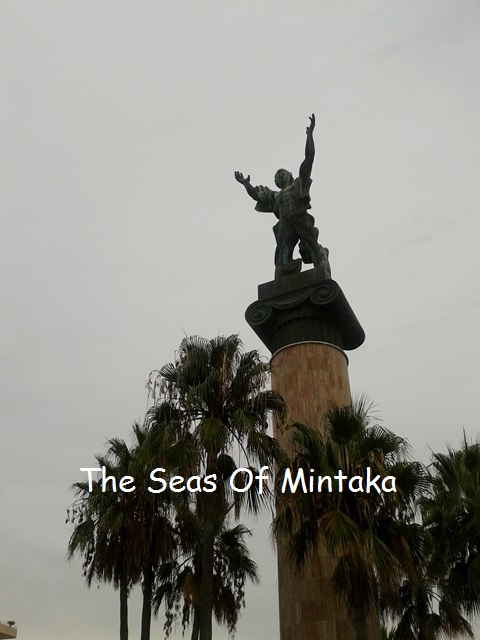
Playa de Puerto BanusThis is a weird statue, commissioned for a huge sum from a Russian sculptor. We thought it was weird since it reminded us of the statue of Columbus that points out to sea in Barcelona.

Statue Puerto Banus

This is the statue of Columbus in Barcelona.

Colon Barcelona Columbus Statue

Sunset in Puerto BanusIt’s hard to see them, but if you squint a little bit you can see the itty bitty (and not so itty bitty) fishies in the water here.

Fish Puerto Banus

Little fish, big fish, swimming in the water
Come back here, man, gimme my daughter!

PJ Harvey

Imagine being the owner of one of these!

Yachts Parked in a Row Puerto Banus

 Lighthouse Puerto Banus

If you enjoyed this post (I really hope you do!), maybe you will also like:

La Línea de la Concepción

Marbella, Land of the Jet Set?

The Barcelona That Tourists Never See

The E-Book You’ve Been Waiting For

The Science Museum of Granada

After our previous very unfortunate and “ill-fated” visit to Granada – ill-fated because after scrimping and saving in order to take my son to the Science Museum of Granada (Parque de las Ciencias) for his birthday – when we finally got to go, since museums here in Spain usually close on Mondays, we very deliberately made sure to go on a Tuesday…… and it was closed! The only week of the year in which the Science Museum opened on Monday in order to close on Tuesday, because it was a holiday, and that was the week we chose to go!

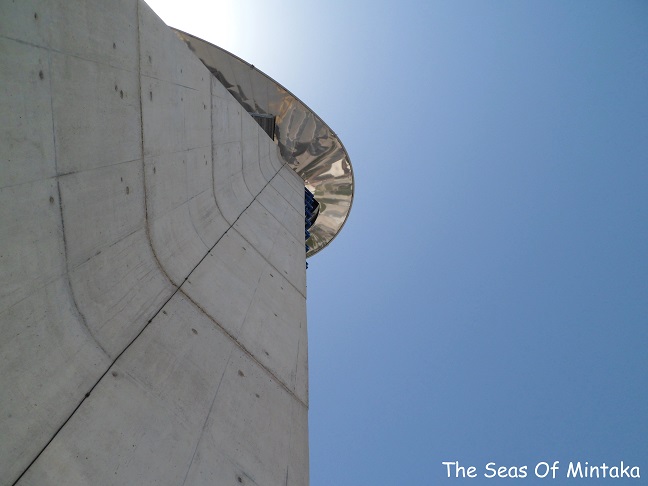
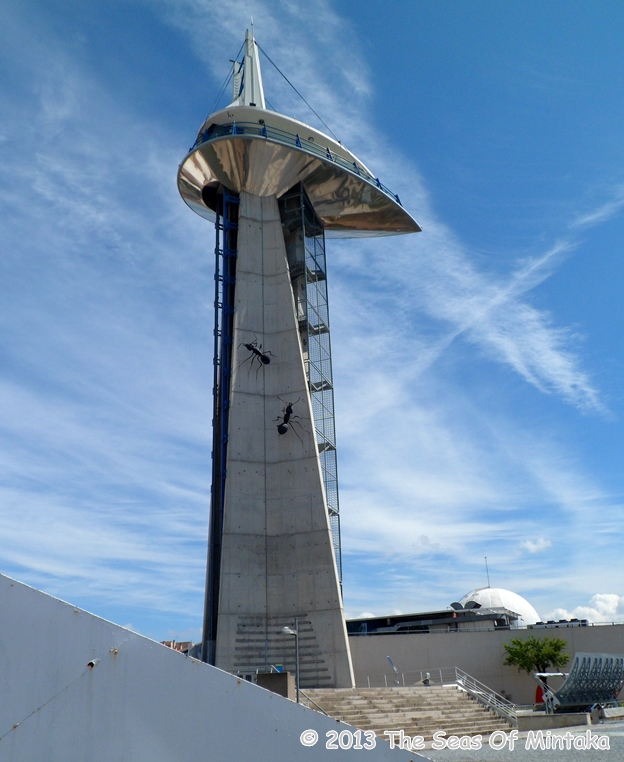
Observatory TowerSo at any rate, as a very belated (as in, one year and one month late) birthday present, we finally managed to get into the museum.

Science Museum GranadaWe’re very hard put to get to Granada, even though it’s not that far from Malaga, only about an hour by car. But if you don’t have a car, it’s a 60€ round trip for three people, and of course, when two of these three people are unemployed minors, guess who has to foot the bill?

We watched a falconry display (actually, more accurately a bird of prey show) featuring an owl, an eagle and a falcon. The falcon took off for a long flight and most spectators got bored waiting for it to return and left. People today have such short attention spans!

The Science Museum also boasts a large Butterfly Zoo with exotic species from around the world. It was supposed to be a “tropical” zoo, but I think it was hotter outside (it was a very hot day, about 36º Celsius) than inside the zoo.

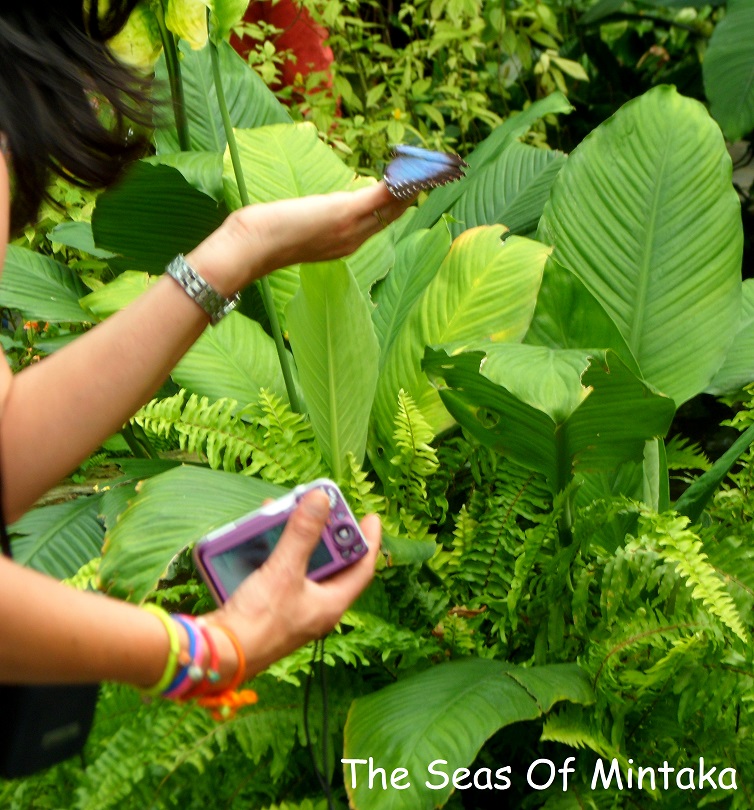
One girl enjoyed the immense good fortune of actually persuading a butterfly to alight in her hand.

Girl Holding ButterflyThis is a machine for creating tornados and hurricanes in the water.

Turbo TubeThe Science Museum has a tall tower with an observatory at the top, which you can reach by going up in a glass elevator. I took photos of the view of Granada from all around the tower, but most of them only came out so-so because Granada doesn’t have a particularly compelling skyline.

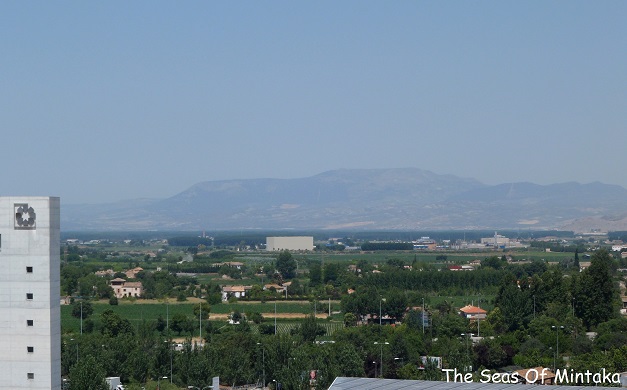
Granada Aerial ViewOne thing that was quite strange, however, was that there was still snow on top of Sierra Nevada, now in June, in spite of the most impressive heat that we were experiencing in the city (36º Celsius of pure, cloudless sunshine).

Sierra NevadaYou can choose to walk down by stairs instead of going down in the elevator, if you like. (You can also choose to walk up, but I doubt that that is a choice many would make.) If you choose to walk down, at every landing there is a sign telling you what height you are at, and some object on earth which is the same height.

My sons don’t work as workmen. But there was an activity that let you feel what it would be like to work in that profession.

In The WorkplaceThese odd, irradiant spacemen are not spacemen at all, but rather, my sons on an infrared camera. They had the time of it jumping around in front of the camera!

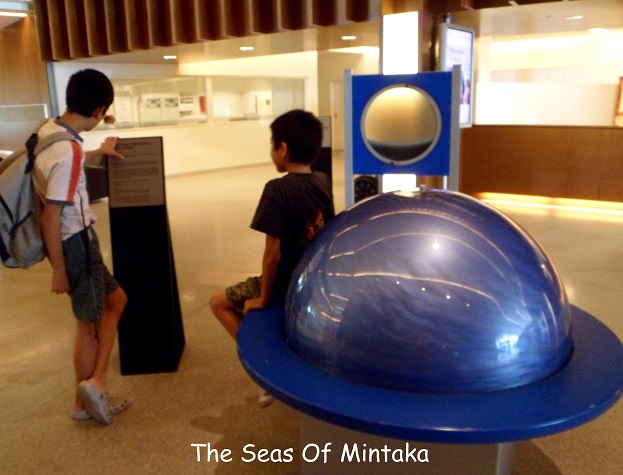
At the entrance to the museum are some balls that show how planets were originally formed, made with very finely-sifted, coloured sand floating in water, that you can spin around. You can see they also make stupendous carousels for children to ride on.

Riding on the PlanetsMy oldest son, who is a science junkie, couldn’t get enough of the museum, and read every single word on every single information panel. My youngest son, however, was thoroughly bored and tuned out about halfway through the visit. My recommendation if you plan to visit the museum with small children who aren’t particularly crazy about science? I would say to divide the visit over two days, if at all possible.

The museum is usually open from Tuesday to Saturday from 10 in the morning till 7 at night, it closes at 3 in the afternoon on Sundays, Mondays closed. But of course, as mentioned above, they are subject to unpredictable variations in their schedule, so if you are planning to go and you don’t live in Granada, check out their website to make sure it is open on the day you want to visit!

Their usual entrance fee is just 6,50 € for adults and 5,50 € for children ages 6 to 16 (wish “children” were considered children at all places, in most places round here “childhood” only lasts till the age of 13! Sigh!) and retired persons. There is also parking (paying, of course). Or you could try parking on the nearby streets for free (just make sure the tow truck doesn’t happen by or it will be far from free!).

If you enjoyed this post (I really hope you do!), maybe you will also like:

Stories From Granada

Spain Vs. Canada

A Celebration of Single Motherhood

Happy Giant Cockroach Hunting!

A Treasure Huntin’ We Will Go

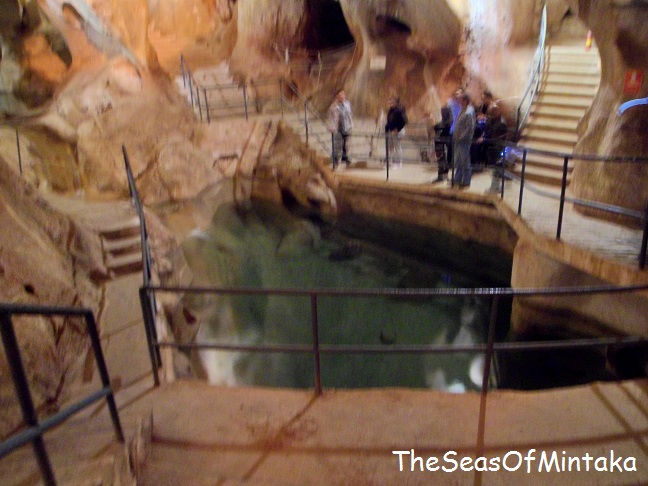
The other day we went Treasure Hunting. That is easy when you live near a Treasure Cave!

Treasure Cave

Our Treasure Cave, La Cueva del Tesoro, is in Rincón de la Victoria right next to Malaga city. We go there every year, actually, but always when the weather is hot. (I won’t say in the summer, because it could be in October, and of course, technically, October isn’t summer – but the weather is still hot.)

This year my son, of the Wild Ideas of Hermenegildo fame, wanted to go there in the winter to see if it would be warm in the cave. You see, I had told him that Cave Homes, like the ones that Granada is famous for, are naturally conditioned and they are cool and fresh in the summer and warm and comforting in the winter, so you don’t need heaters or air conditioners if you live in a cave.

So we hopped on a bus for our annual pilgrimage to the Treasure Cave in Rincón de la Victoria. Whether you go there by bus or car, it’s easy to arrive – once you know the way. The problem is that the route isn’t mapped out or indicated with signposts anywhere (that I’ve seen).

Anyways, to get there, you take the big winding main road that passes through La Cala del Moral and Rincón de la Victoria, the coast road (not the autoroute). After La Cala del Moral this road will start winding its way up a large mountain, you will know it is the right place because it is very spirally and coils around a lot.

When you reach the top of this winding mountain road, at its highest point, that is the place to hop off the bus, if you are taking the bus in from Malaga. (Most buses that head eastwards out of Malaga will stop here for you.)

If you are taking the car, take advantage of the fact that you have a car and don’t hop out of it! Instead, veer to the left onto a road. I don’t know the name of the street, and there are no signs to indicate that it’s the right street. It’s just the street at the top of the winding mountain road where there is a traffic light (there aren’t any other traffic lights nearby). Very useful information, right?

When you get onto this street, just keep climbing and climbing and climbing…… and climbing. It’s great exercise for your legs, or for your car motor, if you come by car. You will come to a roundabout. Go around the roundabout and keep climbing.

Even when you arrive at the cave it is very easy to miss it. There is no sign or anything there to point out to you that you have arrived at a cave.

Treasure Cave Entrance

This is what the cave entrance looks like. As you can see, there is no way that you can tell that there is actually a cave somewhere in there!

The lighting was also pretty lousy, because it was, as usual, raining. A Cuban acquaintance once told me, “I dunno why they call this the Sun Coast. They oughtta call it the Always Cloudy Coast, or the Rainy Coast. Now Cuba, that’s a whole different story. In Cuba it is sunny all the time.”

However, one of the reasons I chose Malaga is because it does rain. If I had wanted perpetual sunshine, I would’ve headed off to Almería, which is a desert.

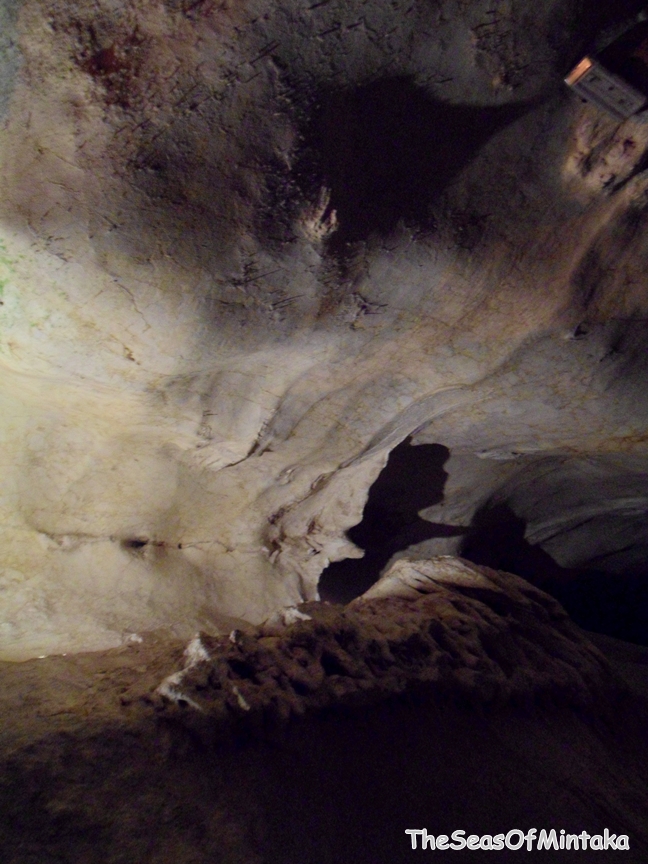
Shapes and Shadows

Anyways, the entrance fee is very cheap. And if your kids are members of the Club “La Banda” and have their membership card, entrance is free for them.

The only way to see the cave is with a guided tour. Guided tours are very frequent and run every half hour or so. Take care though, as they do close for lunch and the last tour in the wintertime is at 5 o’clock. (In the summer, I believe it is open an hour later. Which is good because at 5 o’clock in the summer you will die from sunstroke.)

Okay, well I’m not going to wax informational and spit out information that you can read on any website or tourism pamphlet about these caves. I’ll just mention a few bare facts.

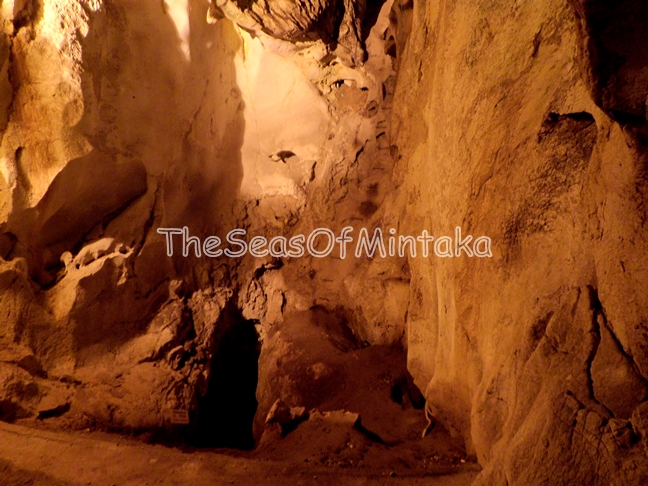
This cave is special because it was an underwater cave, and it was formed entirely from the erosion of seawater on the rocks. After the seawater withdrew and the level of the sea went down, this cave emerged. There are only three underwater caves in the world (that is, caves that used to be underwater and are now above ground) and this is the only one in Europe.

It got its name because of the legend that this Roman guy hid away in it for eight months escaping from his enemies, and left an enormous treasure behind inside this cave. Many people have gone a-searching for this treasure, but they’ve all left their fortunes, energies and the health of their backs in the process (I mean, after all, excavating isn’t supposed to be exactly the most beneficial exercise for your back, right? If you want to strengthen your back, I would recommend you take yoga classes rather than spending all your time digging in a cave), without any luck.
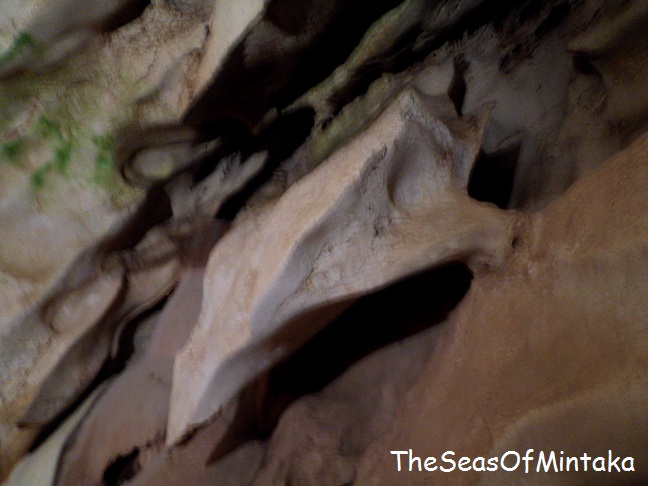
Eagle

The first cavern you will enter is called the Eagle Cave (la Sala del Águila). This is because of this rock formation which looks like an eagle’s back and head. (Sometimes the photos didn’t come out too well because we couldn’t use flash.)

Cave of Noctiluca

The next cavern is the Cave of Noctiluca. Noctiluca is the goddess of the night, the full moon and fertility. In prehistoric times, people made offerings of the sacrifices of small animals to her. They slaughtered the animals and dribbled the animals’ blood into a basin below her “statue” (in reality, a natural rock formation).

Cave of Noctiluca outlined

In case you can’t distinguish her silhouette too well, here it is in outline. (At least that’s the way I see it. You know, these things are like constellations, you have to throw in a lot of imagination to see what people say they see.) The large round hole above her head is supposed to represent the full moon.
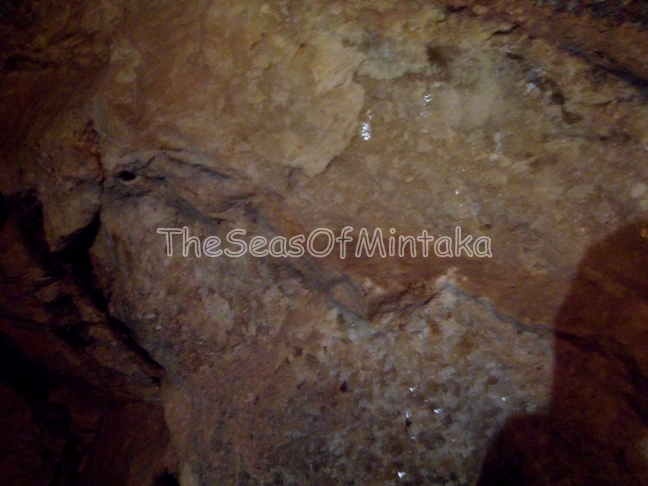
Cave Crystals

These are some crystals glistening in the cave walls.

Cave of Lagoons

This is the Cave of the Three Lagoons, because it has three natural lagoons in it. (The photo isn’t very clear because these guided tours run around as if they were some sort of marathon instead of a touristic stroll. I usually like to take several shots of everything and then choose the best shot, but in this case, they wouldn’t let me, because they were all galloping about as if the cave were about to crash down upon us or something.)

Lagoon Cave of Lagoons

This is a cave which is still in the process of erosion, because rainwater continues to seep into it and form little streams and, of course, these lagoons.

More Shapes and Shadows

I had the pleasure of translating the tourism pamphlets for the City of Rincon de la Victoria, and if you go to the Tourism Office in that town, you can read my translations in English. They also offer a free audio guide in English that you can download to your iPhone or SmartPhone and if you do that, you can listen to me, since I did the English recordings.

However, apparently Management at the Treasure Cave didn’t take advantage of my services and had their information panels translated by someone who was obviously not a native English speaker. The result is that you can read such strange headlines such as “The Geological Training of the Caves” instead of “The Geological Formation of the Caves” (La Formación de las Cuevas).

(Oh that is so not nice of me to laugh at someone else’s bad work, isn’t it?)

Hole in the Ground

This is one of the many openings that the cave has into the ground above.

The Cave of the Three Lagoons is the last cavern to be visited in the guided tour, which is fairly short.

And as to the answer to my son’s question, as to whether caves are warm in the winter? Well, we still had to keep our jackets on during the frenzied relay race er, I meant, guided tour. The only area where it was warm enough to walk around in T-shirts was in the deepest cavern (not shown in this post), the Volcano Cave.

Well, just had to end this post with an outdoors pic, instead of yet another dark, lugubrious, underground photo. This is the coastline at Rincon de la Victoria.
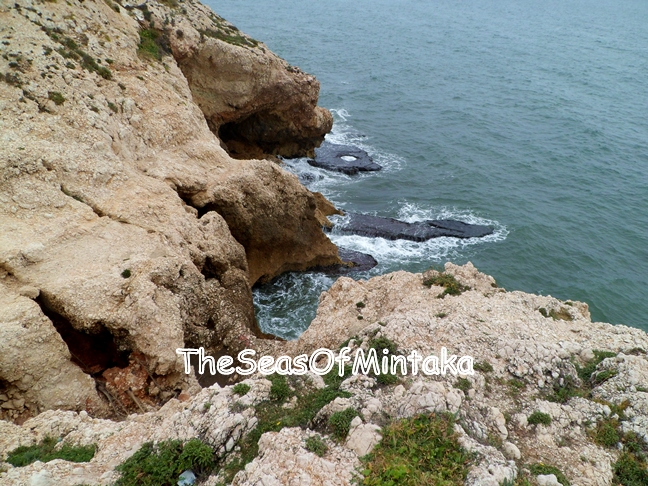
Rincon de la Victoria

If you enjoyed this post (I really hope you do!), maybe you will also like:

Marbella, Land of the Jet Set?

Selwo

What We Do On Week-ends

Subways Around the World

Stories From Granada

You may have heard of Washington Irving’s “Tales of the Alhambra”, right? Well, since I wasn’t able to get any real prime, supreme photos on our trip to Granada, I thought I would instead accompany the few poor specimens I was able to take with stories and anecdotes about our life there.

The Alhambra from our rooftop.

AlhambraThis poor little, split-up thing was the only salvageable portion of a pic I took from the rooftop of our old building where we used to live, back in the day. My little baby was born there (well, not there, he was born in the hospital, but we were living there when he was born), so you could say he was literally born in the shadow of the Alhambra. From our rooftop we had a spectacular view overlooking this famed Moorish castle. You can’t see it very well in the photo though.

(I might add that it was even taken in those olden days when digital cameras were only the possessions of the rich and the famous (or technology-obsessed computer geeks), which we obviously were not. In other words, we took it with an analogue camera and scanned it into a computer, hence its crooked lopsidedness.)

You might be wondering, with such a privileged location even someone richer and more famous than us would have died for to possess, with our complete and unobstructed view of the Alhambra day and night, why we left. Well, my husband (now ex) packed up his bags and moved to Venice with an Italian girl. I got tired of sitting all alone with the baby on the rooftop and gazing at the Alhambra and decided that I preferred to gaze at the sea instead. So we left, and it was one of the best decisions I ever made.

(I might add, he returned a few weeks later with his head hanging, something about the Italian girl not willing to support him and demanding that he get a job……)

Plaza Nueva

Ah, the famous Plaza Nueva which is most emblematic of Granada. I think every tourist knows where it is and has passed through it sometime. I have so many tales to tell about this place, I could probably fill up a whole book.

It’s a mecca to every hippy, saltimbanco, juggler and rasta on the planet, I believe. Okay, so in this photo it looks kinda forlorn. I guess maybe it gets a bit livelier when the weather lightens up.

Reyes Catolicos

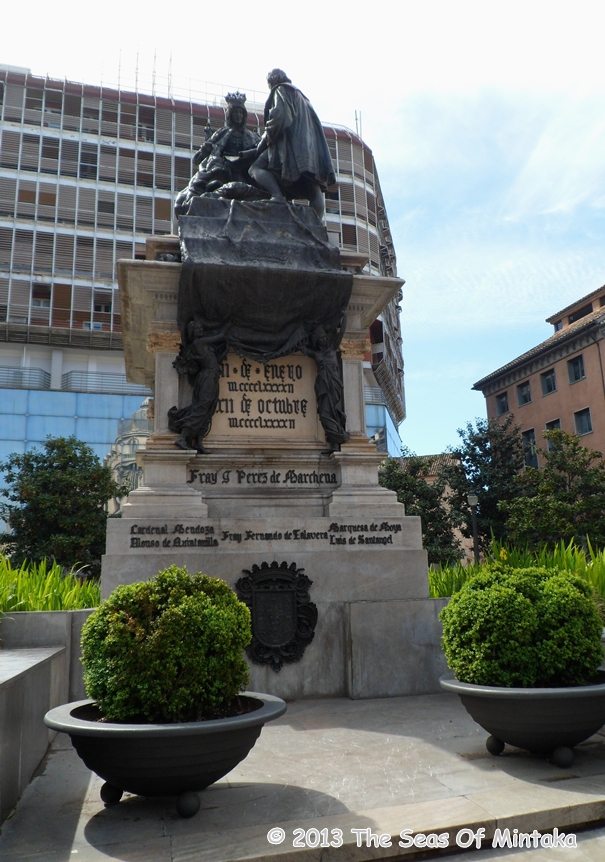
This is the famous statue of the Catholic Monarchs (Isabel and Fernando) which probably every visitor to Granada has seen (and posed in front of). My kids weren’t going to be outdone and had to pose in front of it too.

Science Museum

The Science Museum.

This was the actual object of our visit to Granada. Our luck is fantastic and on the one day that we had chosen to visit the city, it was closed! Normally it is closed on Mondays, so we went on Tuesday – and it was closed! Something about a bank holiday……

Fuente de las Batallas

La Fuente de las Batallas (the Fount of Battles).

Well, actually, La Fuente de las Batallas is the one beside this one. I couldn’t take a photo of the actual fountain, because there was some sort of protest march around it. But this one is right next to it, and it’s quite similar, so I figured, it can sort of substitute. Right?

I used to love going there on lazy summer afternoons with my newborn and have an Italian gelatto. It’s what I remember about this fountain, and I associate it with Italian ice cream now. Of course, I’m sure we did other things there too. But that is what I remember.

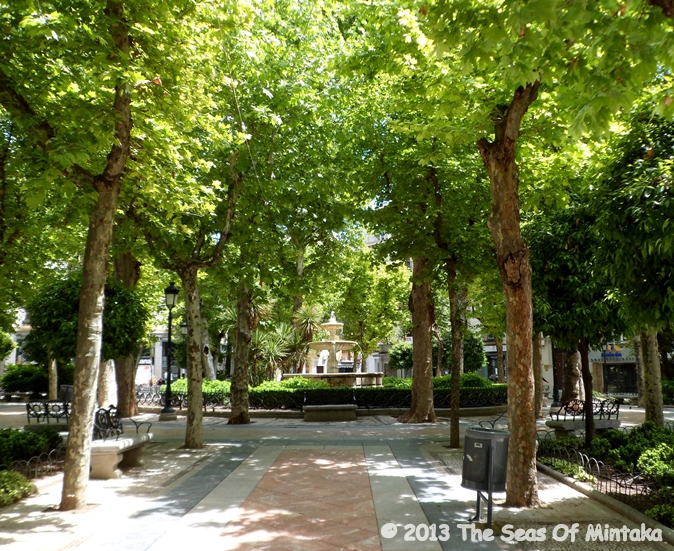
Garden

Balloon Man

This is the long passage that leads from the centre of Granada and Bib-Rambla to the back streets behind the cathedral. A friend used to live there, and my son spent many afternoons bawling away in her home. (When he was born he was always bawling.)

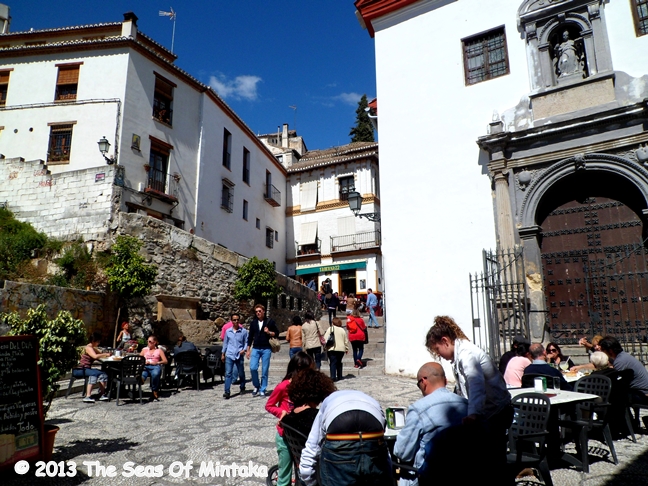
Cuesta de San Gregorio

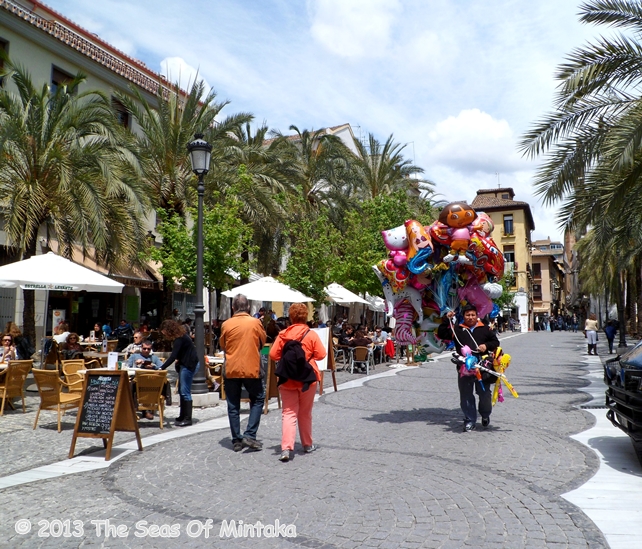
This is perhaps the most frequented little lane in Granada, the Cuesta de San Gregorio, the entranceway to the Albayzín, the old Moorish neighbourhood. It’s lined with teterías (tea shops) all the way up, and it’s very typical to go there in the afternoons and sip hot mint tea while nibbling at Arab pastries and sweetmeats and observing the crowds go by.

My favourite shop, an ecological, health food store, El Panadero Loco, is on this street, but when we passed by it was closed because, apparently, it was a bank holiday……

I asked the locals and I was pleased to discover that after all these years, business was still booming there. (Taking into account that my son, who was born in the shadow of the Alhambra, is now twelve……)

Cuesta de San Gregorio

Kinda reminds you of a Moroccan zoco, doesn’t it?

San Juan de los Reyes

You can see by this church (it’s actually a cloistered monastery, I’ve been told) that there is a street that leads upwards on the left-hand side. The street on the right (not visible in this photo) is San Juan de los Reyes, and that is where we used to live. It’s a very long, winding and quite renowned street as it runs up the length of the Albayzín.

In the background you can see the bar with the green awning. We used to call it “El Veintiuno” (Twenty-One). Here you can see it up closer.

El Veintiuno

If you pay close attention you might notice that the sign actually says “22”. Why, you might wonder? Shouldn’t it read “21”?

Well, the girl who owned the place was twenty-one years old. When she turned twenty-two, she changed the name to “Twenty-Two”. We can see that she decided to remain twenty-two forever.

They used to serve some truly incredible tapas there. (Well, they probably still do, but it didn’t occur to us to go there this time.) The hippies used to lounge around in there half-stoned, and it was impossible to have a coherent conversation with them.

“What are you up to these days?” you might address one of your acquaintances.

“Ah, just sitting around here, doing nothing,” they would reply with a vague wave of their hands.

“Well, we’re going home now. Where do you live?”

“Over there,” would be the response, with another nebulous waving towards the sky.

Well, I’ve saved up for another day the tales of our “Anecdotes from the Albayzín”, so be on the look-out!

Souvenirs

If you enjoyed this post (I really hope you do!), maybe you will also like:

Sierra Nevada Revisited

The Barcelona That Tourists Never See

Costa del Sol – Torremolinos

Malaga in Black and White

Marbella, Land of the Jet Set?

Do people in Marbella spend most of their days lying around a poolside, sipping champagne and zipping off every once in a while in their own personal yachts when they get bored?

Well, I dunno. Most of the people I know in Marbella are pretty poor and down-and-out. Although, on the other hand, I have to admit that most of the local people I know in general here in the south of Spain are pretty poor and down-and-out. (Unlike in Barcelona, where most of my friends were average, middle-class and with good jobs.)

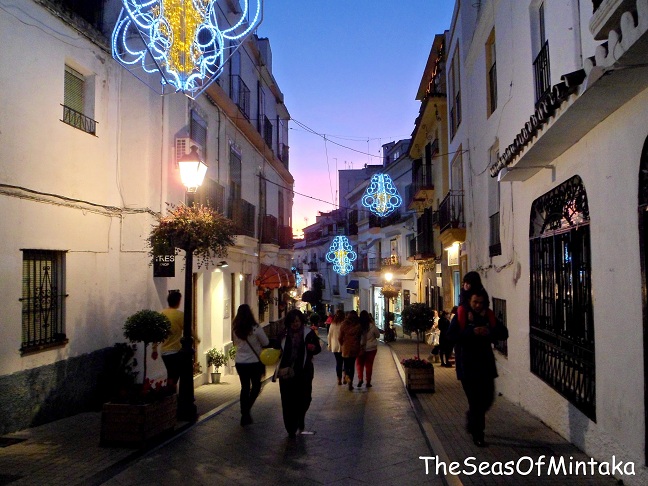
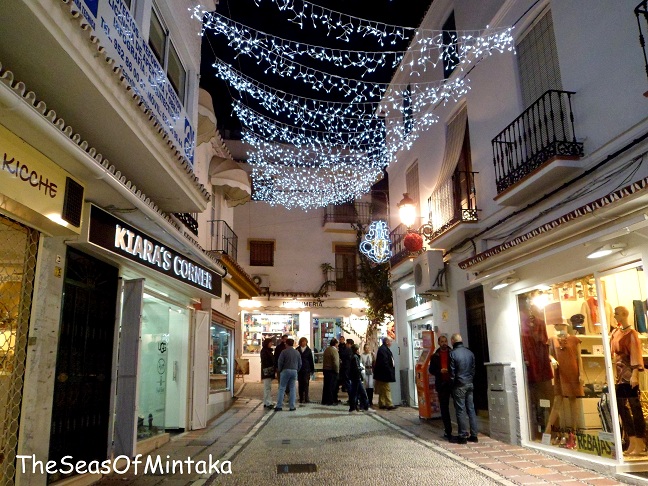
Marbella Street

I’ve got a friend who works cleaning houses. She’s a single mum, she has to struggle to make ends meet. Although she’s been living this way for years, and I guess she’s doing pretty fine when you take everything into account. She’s been able to pay her rent up till now, never got her electricity cut off for non-payment, hasn’t as yet had to resort to living off of flour and potatoes for a week or take her son to the homeless shelter for a meal.

But does she live off of Chardonnay and pink champagne or lounge on the beach in topless designer bikinis?

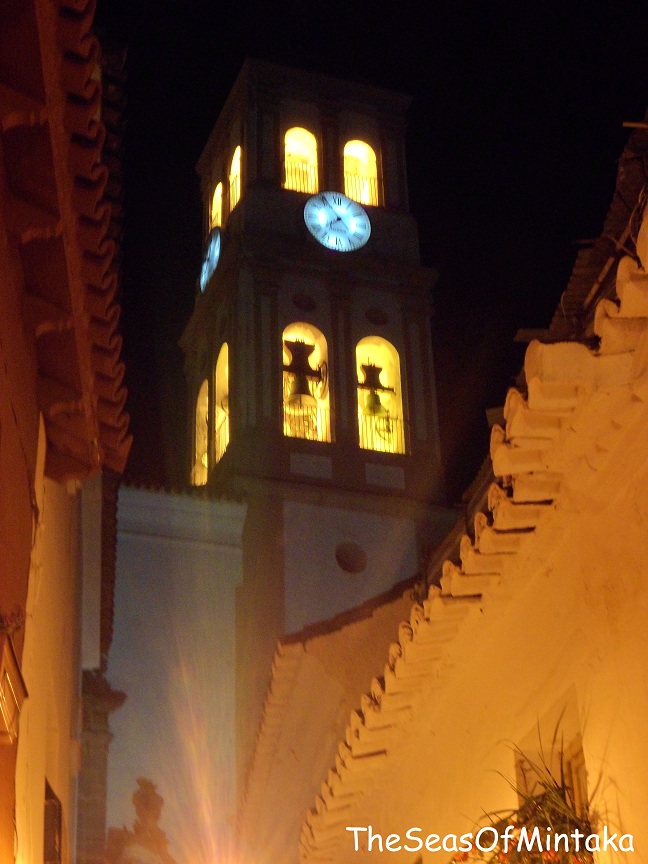
Church Tower Marbella

Well, she does lounge on the beach sometimes. But not in designer bikinis, hers are more likely to hail from the dollar store.

Most of the time she doesn’t have shampoo, shower gel, cutlery, pots and pans or towels in her home. You know, the usual, basic, everyday items that most of us take for granted that everyone will have and that most of us assume that everyone can afford. When she can get it, she usually has milk (after all, she’s got a growing kid) and oil, olive oil when things are going great, sunflower when things are a bit tighter.

Belen Marbella

So, well, you can’t exactly say she’s starving to death. But maybe that’s not exactly how you expect an inhabitant of opulent Marbella to be living, either.

Another friend in Marbella is pretty hip. She’s an artist, so, of course, she makes art. Handicraft, to be more precise. Then she sells it in improvised stalls at street markets.

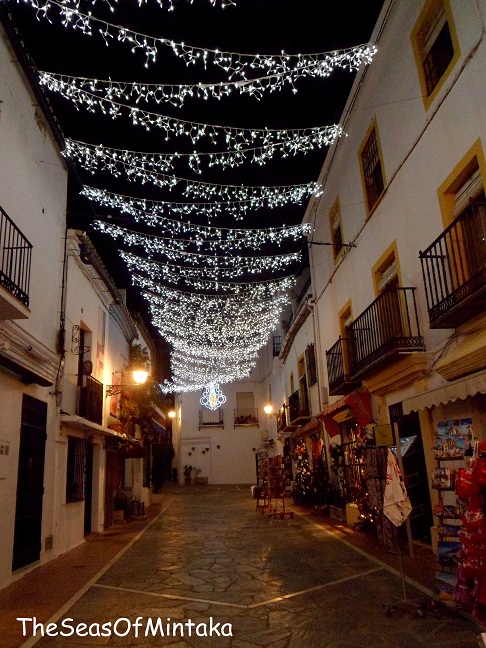
Passageway Marbella

Well, that’s not such a bad way to make a living. She says her best-selling wares, nonetheless, aren’t her artwork but rather, cheap clothes that she barters away for one, two or three euros apiece.

You know, fashion’s quite important in Marbella.

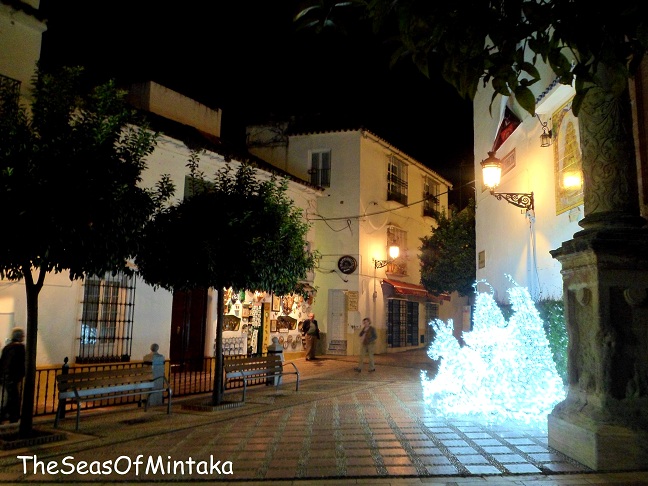
Square Marbella

Now, I know that supposedly, a lot of world-class citizens are supposed to own mansions and palaces in Marbella. The famous (and wealthy) Spanish singer Isabel Pantoja is perhaps Marbella’s most renowned sweetheart. Arab sheiks seem to like to make Marbella their home. The rich and famous favour Marbella as their winter hideout, and I imagine that if you mention the name of this small city, probably images of luxury spas and giant estates surrounded by lush gardens and palm trees spring to mind.

But the truth is, I didn’t see any of these famed properties. Now, logically, I know that they exist but I guess, like the mythical Shangri-La, maybe you’ve got to be “in the know” in order to be able to find them. Sort of like the mystic valley behind the mountains whose doors only open to you if you happen to be a seeker of spiritual truth, or something of the sort, and you come in peace.

Typical Street Marbella

So in conclusion, I guess Marbella is just yet another example of a typical southern Spanish locale where the lifestyles of the “natives” (ie. Spanish people) differ enormously from those of its foreign (and usually world-celebrity) inhabitants.

Now, I know that Marbella and, for that matter, the great majority of communities both large and small in southern Spain, are going to be just fairly normal, average, ordinary towns where you can find all sorts of people. Well-to-do people with large homes surrounded by gardens, middle-class citizens with reliable but not outstanding jobs and poorer, more marginal types, who work in the “domestic assistance” sector or at odd jobs.

Marbella Lights in the Sky

But it strikes me over and over again how such a large proportion of the Spanish people I know and meet in this part of the country belong to the “poorer, more marginal types”, as opposed to well-off foreigners or Spaniards with steady employment living in other regions of Spain, such as Madrid, Barcelona or basically any northern city.

And over and over again it makes me wonder: Is it just the culture? Perhaps here in this part of the country kids aren’t encouraged to work? Maybe they just grew up used to observing their out-of-work fathers lounging around on the sofas most of the time, and decided that that was the way people are supposed to live? (I say fathers, of course, because on the contrary here mothers never rest. There is always more work to be done around the home, meals to be cooked, rooms to be cleaned, clothes to be ironed…..)

Wrought-Iron Head

What really struck me about this balcony was the incredible intricate faces in wrought iron. Do you see them?

Is it just the attitude? Maybe here people don’t bother trying, because they think: Well, Andalucia has always been poor, so what’s the use?

I don’t know what it is that exists here in southern Spain, that keeps people poor and uninterested in obtaining or completing their education. I don’t know why so many people take “recreational” drugs here. Well, I know that drugs are a major problem in many parts of the world, and not only here. But here, I get the impression that most people take them. Or at least most of the people that I know, at any rate.
My ex brother-in-law recently passed from an overdose of the medication he was taking to wean himself off of strong illegal substances. He came from a good, well-off, educated family. He didn’t need to take drugs. He had a successful business.

Many of my friends here take drugs too. A little bit of Mary over here, a joint of hashish on the beach. Some coke if you’re successful and you can afford it. It doesn’t matter who you are or how much (or little) money you’ve got, drugs are always readily available and easy to obtain at any gathering with your friends.

All the same, I thought I’d leave you with some images of historic Marbella in the evening, with the colours of the setting sun tinting the sky.

Marbella Street With Flowers


Here is a photo full of light, in case you were tired of gazing at all those dark night photos.

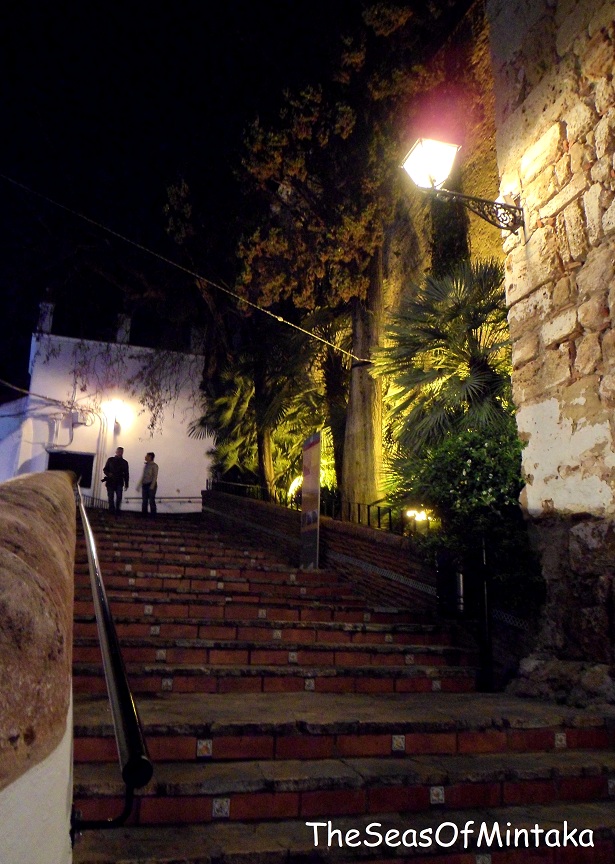
Staircase Marbella


If you enjoyed this post (I really hope you do!), maybe you will also like:

Torre del Mar Curiosities

Torremolinos

Photographs From a Typical Day

Selwo

On Christmas Day in the Morning

When we woke up on Christmas morning, my son looked out the window and said, “It sure looks like a great day to go out.”

So we went out. We actually went out in the afternoon, because if we go out in the morning the kids don’t pay attention to anything except their stomachs the whole day long. So it’s much better to fill them up first with a hearty lunch.

Parque Alameda Malaga

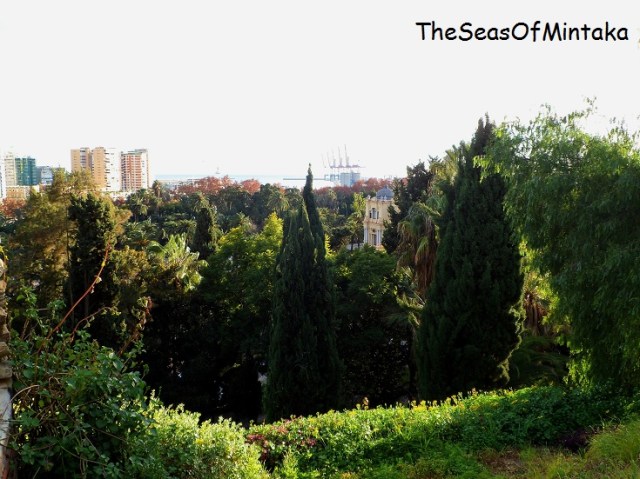
First stop: Alameda Park, the major park in downtown Malaga that’s right next to the port. We snapped a pic of the lush winter foliage and then immediately, we were off to the real object of our day trip: the Moorish castle that overlooks all of Malaga, the Castle of Gibralfaro.

Climbing Gibralfaro Mountain

I took a lot of photos of Malaga looking progressively smaller and more bird’s-eye sort of view as we climbed higher and higher, but those will have to be the subject of a future post.

Flowers Gibralfaro Malaga

Yes, this is really what Malaga looks like on Christmas day. Certainly not a sight that you could ever see in cold Canada!

Flowers on the Mountain Malaga

But then again, this is southern Spain.

Walls of the Alcazaba Malaga

The first part of the climb was simply stairs and more stairs meandering through a very pleasant park with lots of plants, especially flowers. We could see Malaga shrinking below us, but other than that, it didn’t seem too different from a walk through any other urban park on a mountainside.

And then we reached the castle. This is a view of the actual walls from below, when we first came upon them. These walls are probably over a thousand years old. (I’m not too sure exactly, would have to check up in the history books, but taking into account that the Moors ruled Spain from the eighth to the fifteenth centuries, that would more or less be a rough estimate.) Formidable!

Oven Gibralfaro Malaga

My son discovered this mystery lurking in the mountainside underneath a sort of cliff wall, well hidden from sight from the main pathway. We’re not too sure what it is, but it sort of reminds me of some type of oven, perhaps.

Flowers by the Alcazaba Malaga

We wandered around the castle a bit. Moorish castles in general are known as “alcazabas”, the ultra famous Alhambra in Granada is the best-known example of a Moorish castle or “alcazaba”. However, it’s not the only one in Spain, as virtually every southern city enjoys its own. Most are run-down and not very showy, but they are all conserved as monuments and you can usually visit them. We’ve also been to the one in Almeria, not very well-known at all in the rest of the world (or even in Spain, for that matter).

Sunset Alcazaba Malaga

The sunlight glancing off the walls of this “alcazaba” reminded us that soon it would be dark. I found the colours of the almost-setting sun a striking golden-orange sort of shade against the red earthen walls.

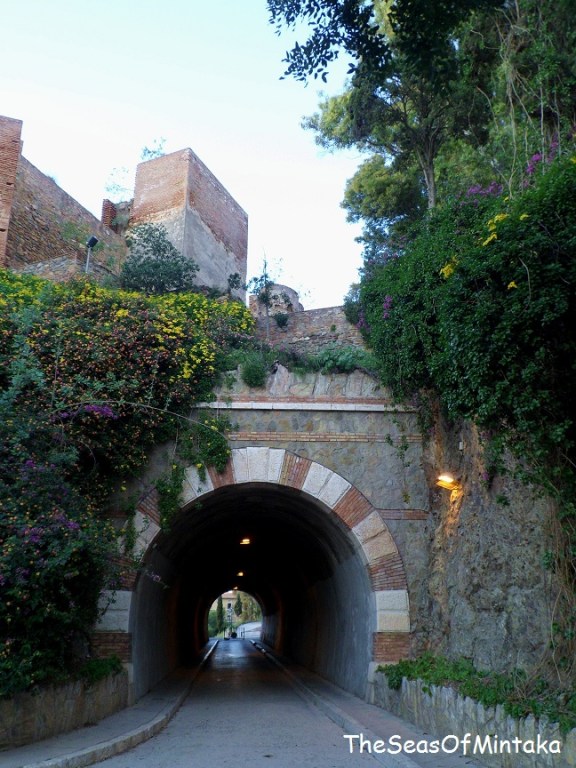
Tunnel Gibralfaro Malaga

After admiring the setting lights we decided to check out this tunnel that runs underneath the monument.

It leads to the back of the mountain and, in fact, the castle itself is like the centre of a star and depending on where you begin your descent from the mountain, you can end up in different parts of the city, with each pathway down acting sort of like a ray that spreads outward from the centre of the star towards a different neighbourhood.

Flowered Path

But we weren’t ready to go down yet!

Steps Alcazaba Malaga

As you can see, we continued climbing UP!

Path Gibralfaro Mountain Malaga

Path in Black and White

Good exercise for the soul, and I finally realized why my son failed Physical Education!

Setting Sun Alcazaba Malaga

A last view of the sunset off the reddish-golden walls.

Malaga Cathedral by Night

I found this view of Malaga’s cathedral as we left the grounds captivating. The night air was behaving and acting especially crisp and clear today.

Bar Malaga

Of course, you can’t end a day like today without something warm and filling. So we took a different route down into the city centre so we could enjoy tapas. What a fantastic ending to a lovely Christmas day.

Torre del Mar Curiosities

A few days ago we decided to take off again, on another short day trip nearby. We figured it was time we finally discovered the lands…… East of Malaga! I wanted to go to Torrox, but it rained for days on end, never affording us the occasion to explore that picturesque village under clear blue skies (which lend themselves so much better to taking bright, jazzy photos), so one fine, rainy day we decided we’d have to see Torre del Mar.

Bienvenidos a Torre del Mar

Now, that isn’t because Torre del Mar is particularly beautiful, nor is it full of monuments. But grey skies don’t encourage photography very much, and it’s a fairly large town which I fancy any self-respecting resident of Malaga should get to know at some point in his life. Right?

So we hopped a bus to Torre del Mar and wandered about a bit. We didn’t do a lot, and it wasn’t an exciting visit, and there wasn’t a whole lot to see. Sorry if this disappoints loyal residents who happen to be crazy about the town, but we didn’t find a whole lot to see. Perhaps if we had gone out to the countryside instead……

So instead of posting gorgeous, drop-dead portraits with incredible landscapes, I thought I’d just upload a selection of the most curious items that we happened to bump into.

Baby Train

This little baby train is just perfect for babies, which explains why my youngest son was the one who spotted it, I suppose. It’s stuck onto a lone pole in the middle of the beach, we’re not too sure why, but we thought it was cute.

Parrots in Torre del Mar

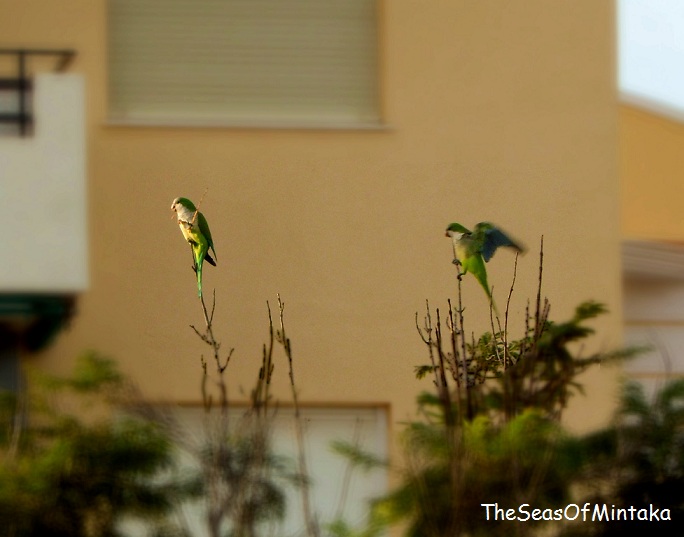
Parrots up a tree.

Biodramina

This is my eldest, still suffering from the ravages of Biodramina (medicine for people who get sick on buses and cars).

Casa Miguel Torre del Mar

Truth is, the beach looks so forlorn outside of tourist season, all alone in the rain with its beach bars all abandoned. Bet the food was yummy during the summertime, though.

Monument in Torre del MarMonument to the Dead Torre del Mar


The plaque reads, “Homenaje a todas las víctimas de la violencia” (homage to all the victims of violence).

We applaud the initiative, however it spurred up a rousing conversation with my son, who wanted to know just exactly what constituted a victim of violence. For example, if you were blown up by a bomb, would that qualify you to become a victim of violence? What if someone murdered you? Could kids be victims of violence too, or did it only apply to soldiers? Are there victims of violence in

countries that are at peace, or do they only exist in war zones? And what happens in the case of a car accident? If a car ploughed aggressively into yours, would that turn you into a victim of violence?

And since we were on the subject, why did the victims of violence need a homage anyways?

Sheesh, I wonder where kids get all their ideas from!

El Meon Torre del MarPlaya Torre del Mar

Thank you for reading!

If you enjoyed this post (I really hope you do!), maybe you will also like:

Foray Into Black and White

Chillar River, Río Chillar

Selwo

Sierra Nevada Revisited

Snow on Sierra Nevada

Signs that you live in a tropical clime:

When in order to prepare for an excursion to a ski resort tomorrow the following events occur:

    • when no matter how hard you look you just CAN’T find any scarves, gloves, hats or mittens, even when you can swear that you kept a special drawer in your apartment JUST to keep strange garments like scarves, gloves, hats and mittens, but when you look in that drawer the only thing you find is an enormous square black cap with a large golden tassel that your son wore for his graduation, ie. his graduation from kindergarten, not his graduation from university, and also 2 Santa Claus caps (probably got them at some party)

View of Sierra Nevada

  • when your son needs to take a crash course to learn how to put on the gloves that his grandfather bought him specially for his trip to the snow, because he just CAN’T figure out how to get one finger inside each glove finger, the reason being that he has never worn gloves before in his life
  • when your kids have to wear rubber rain boots to go to the snow, because they have nothing else to wear

When we first moved here from Barcelona we did decide to keep the winter gear because we said, you never know when it will come in handy. Who knows maybe one year you will do just exactly what we’re going to do tomorrow and take an excursion to a ski resort.

Or maybe one year you just might decide to go on your Christmas vacations to New York City or England or Canada. But of course we never went skiing, and we never went to NYC, England or Canada on our winter holidays.

So the winter gear started disappearing, and getting stuffed further and further back, or moved out of the way. And in the end it all disappeared forever.

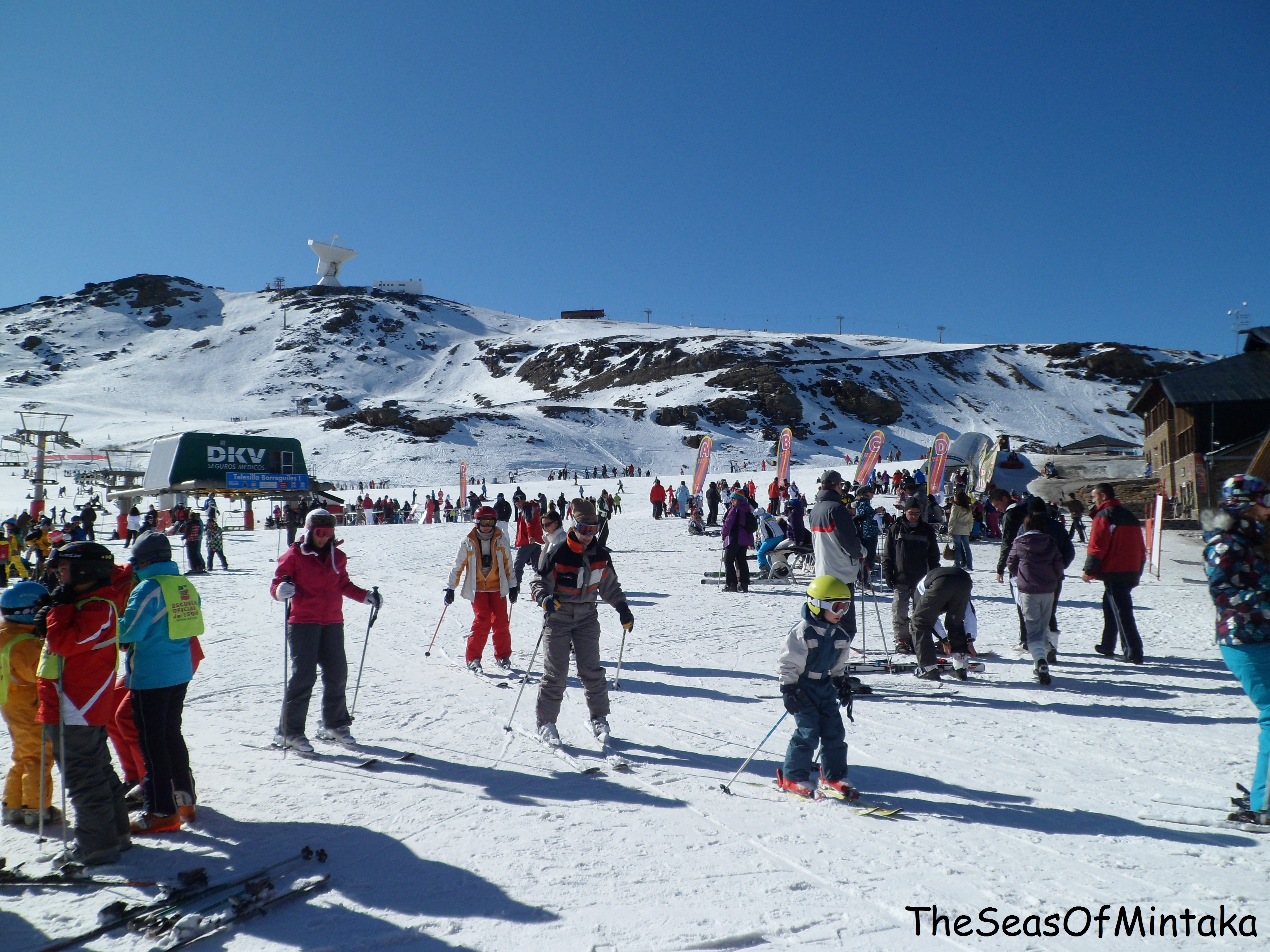
Well as you can see, last month we returned to Sierra Nevada.

Sierra Nevada Granada

For those members of the expedition who were expecting to see snow for the very first time in their lives (ie. my youngest son) the trip was quite clearly a disappointment.

For the rest of us (or rather, for me, who absolutely HATES the cold, the wind, the frost or anything that you won’t find in the tropics!), it was quite a splendorous revelation and a very relaxing outing.

Because we didn’t find any snow.

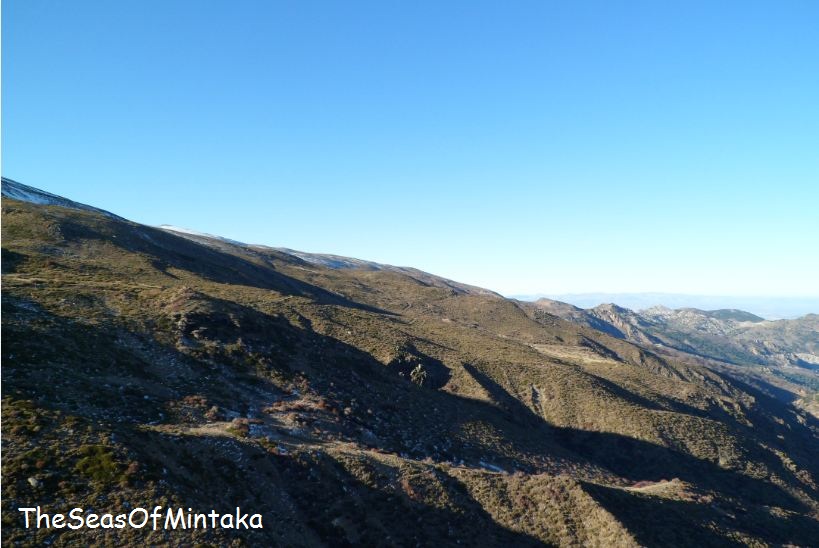
Shadows on the Mountains Sierra Nevada

Except, of course, the artificial variety, absolutely vital in a touristic ski resort that depends solely and entirely on the presence of snow.

So now, here we have yet another sign that we live comfortably ensconced in a tropical clime, here on the south coast of Spain. As we crossed over the mountains that separate our particular Shangri-La from the cold wild north, my sons exclaimed:

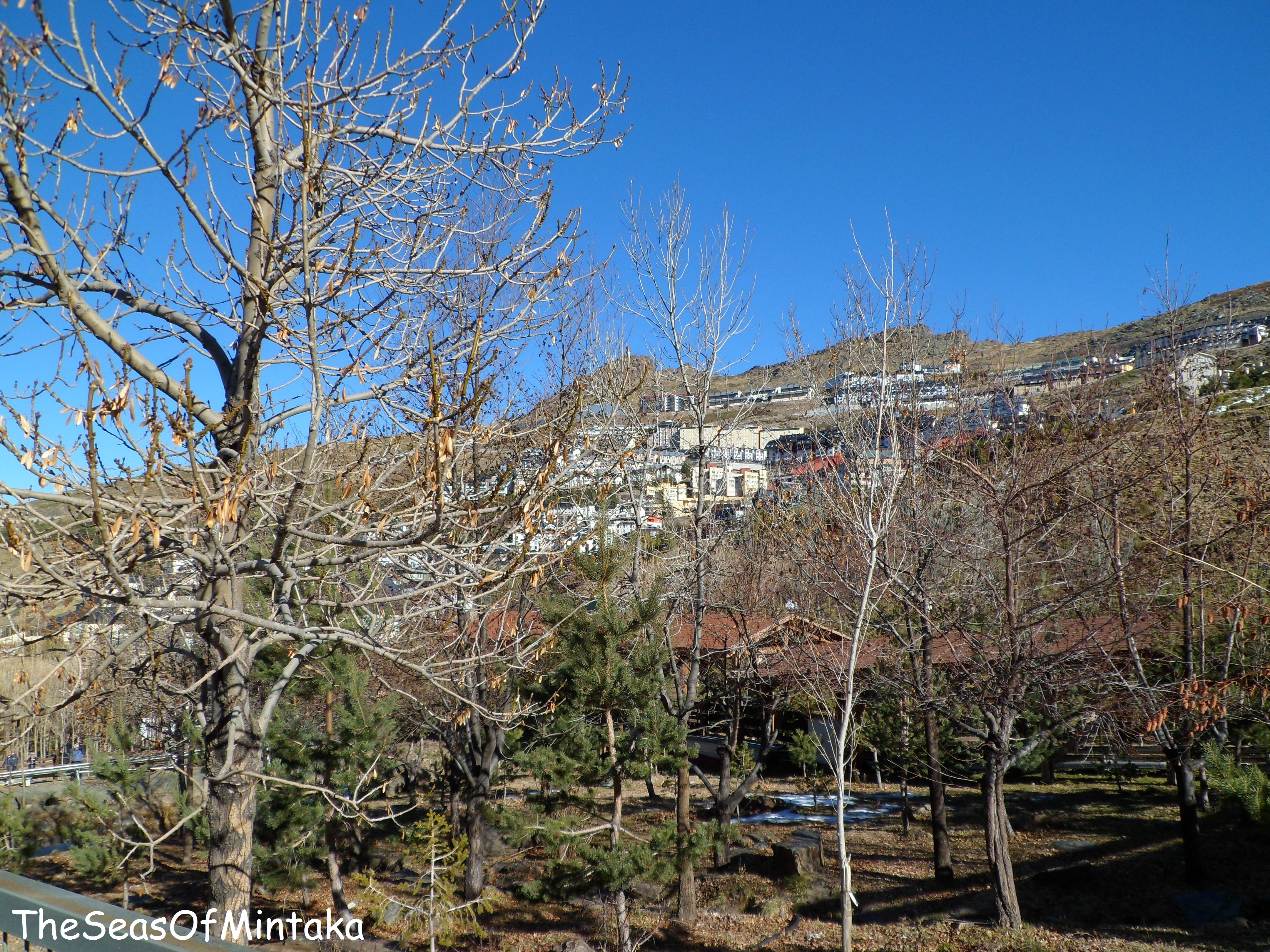
“How come there are no leaves on the trees, Mami?”

Because, of course, on the Costa del Sol, trees merrily conserve their leaves all year round, and these leaves remain green.

Green forever.

Bare Trees on Sierra Nevada

So that pretty much summed up the point in going to the bother of travelling to Sierra Nevada. Because we certainly didn’t do it for the snow.

As you can see, the mountaintops were as bare, as they say here, as a bald man’s pate.

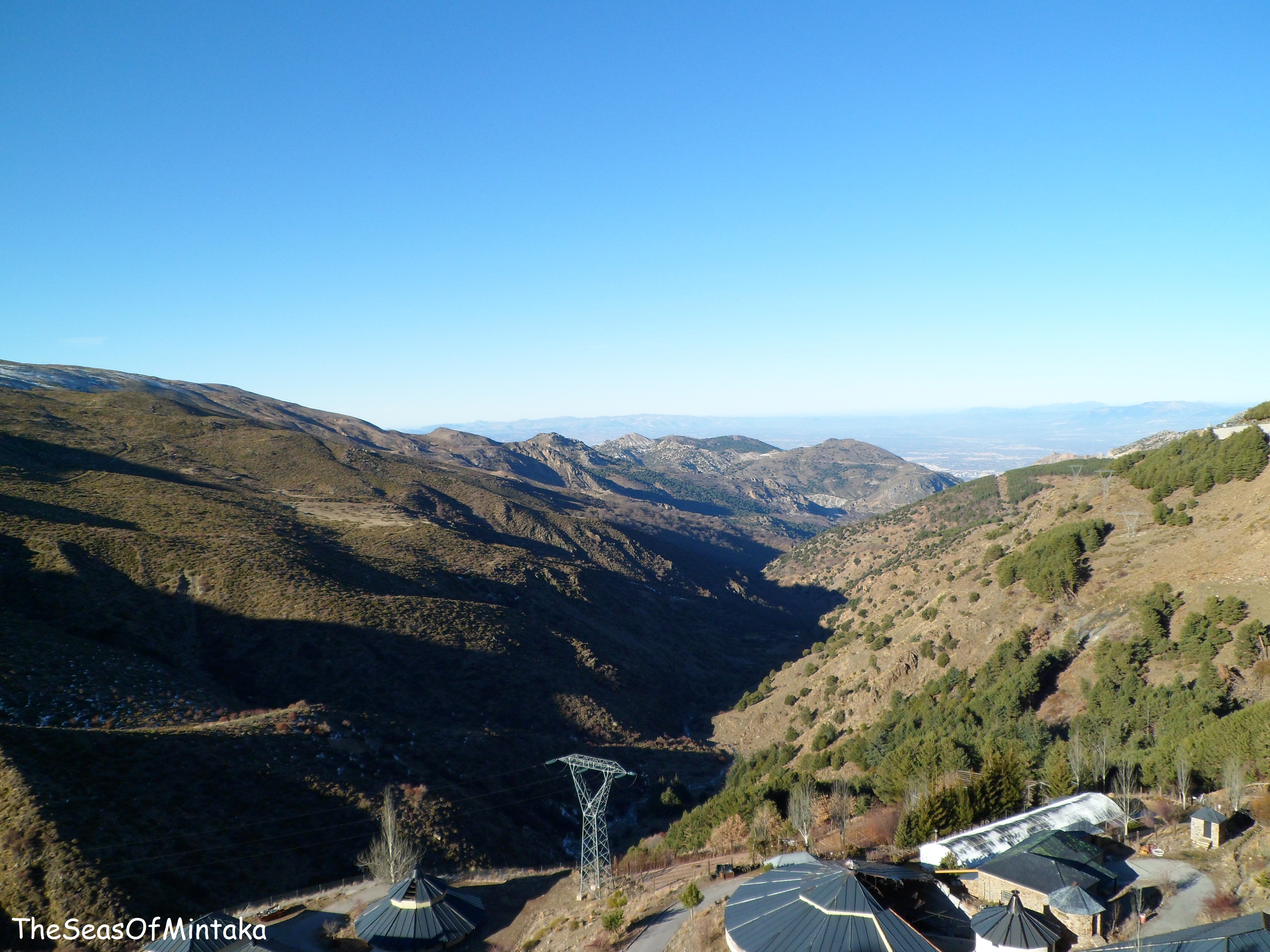
Valley Sierra Nevada

I had been feeling quite distressed because, as I mentioned at the beginning of this post, we had been unable to dig up any winter gear. I was expecting to endow the African vendors up on the mountains with a small fortune investing in hats, scarves and mitts from them.

Corner of Pradollano Sierra Nevada Granada

Instead, the only thing I purchased was a set of sunglasses. Very fortuitous, as it just so happened that I had forgotten mine at home. However, the friendly African merchant was on the verge of setting up an ice cream stand, so so much for that.

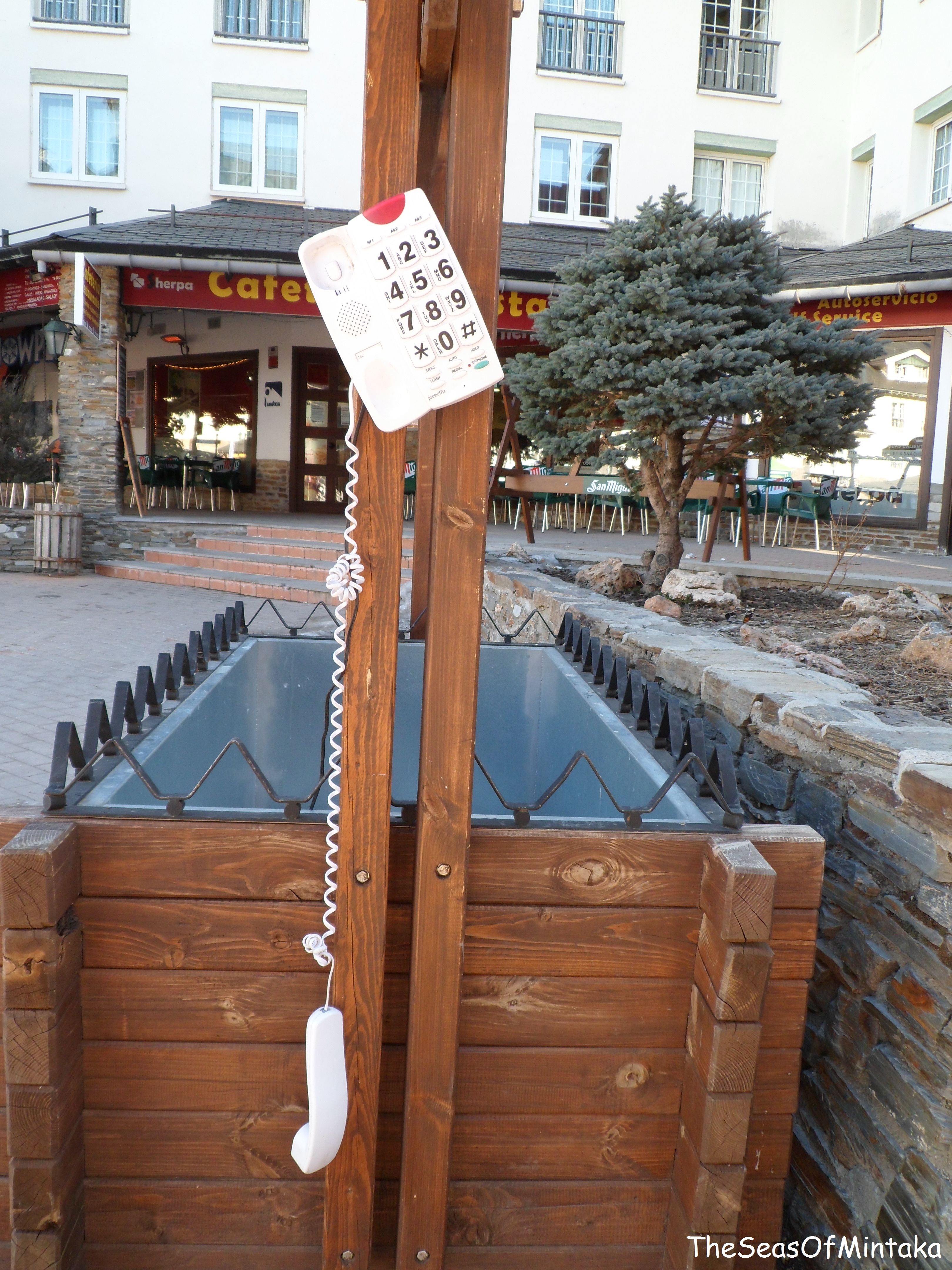
Telephone Sierra Nevada

Now, we really don’t know what in the world this was! But it looked so forlorn there, as well as useless, my son tried to hang it up but it kept falling down again. So we gave up on it.

Pradollano Sierra Nevada Granada 2

Truth is, Pradollano is actually quite a lovely, quaint and Swiss-like village. Its only problem is that (from my point of view, of course) it’s too cold! Most of the time, that is.

Although perhaps not this year.

Pradollano Sierra Nevada Granada

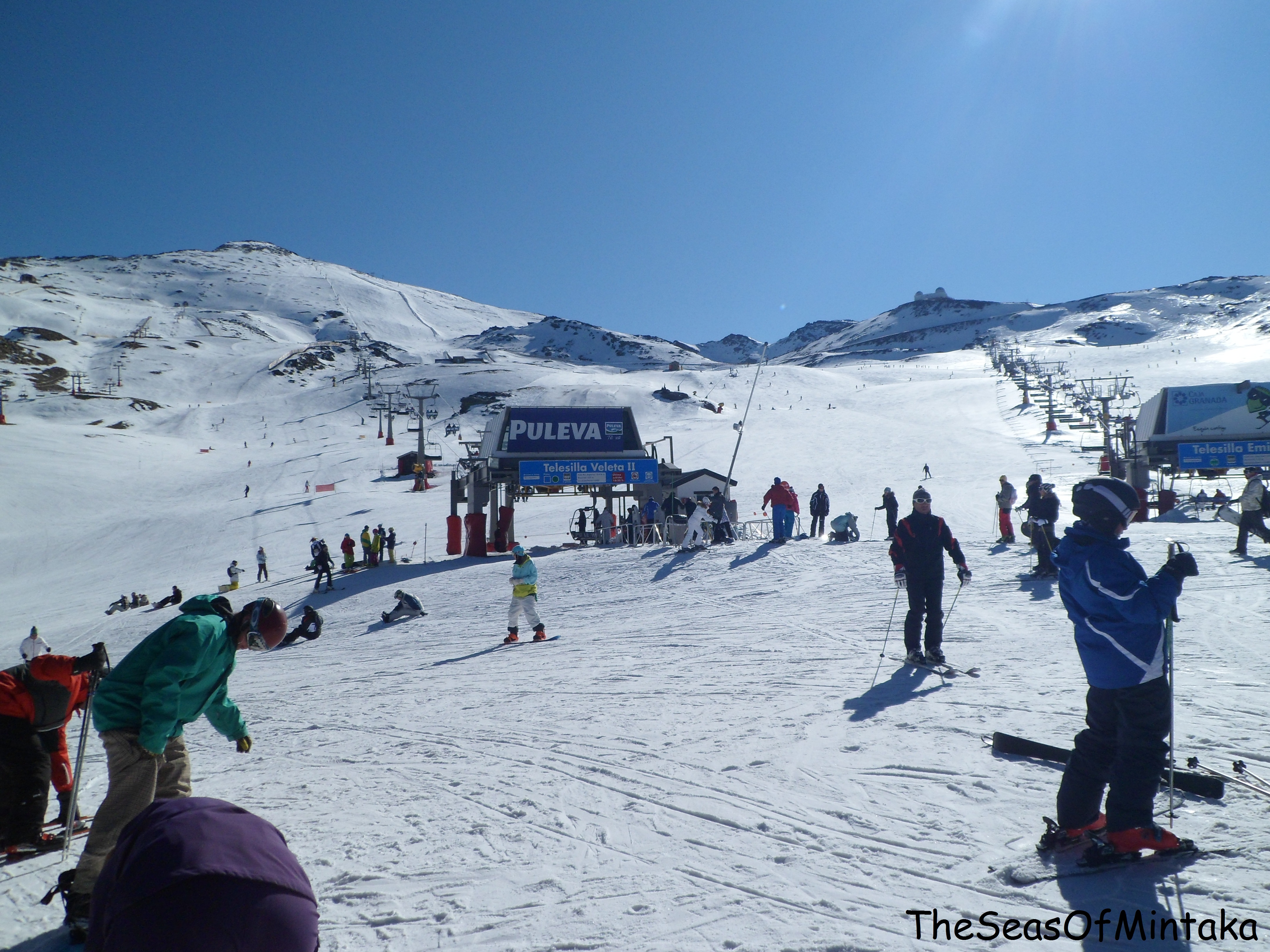
In order to find a little bit of the powdery white stuff, we had to journey up to the ski slopes, where artificial snow machines kept the ground nicely padded.

Ski Slopes at Sierra Nevada
Skiing at Sierra Nevada

And my kids could finally throw a few snowballs.

Throwing Snowballs at Sierra Nevada

Down in the village, we roasted ourselves in the sun a bit. We engaged in my favourite activity, people-watching, and observed that most were wearing T-shirts rather than anoraks.

Footpath Sierra Nevada Granada

And we also noticed that any little vestige of snow that happy skiers proudly brought down with them from the slopes, promptly formed puddles on the ground without any further ado.

Blossoms on a Tree Sierra Nevada Granada

Now, do these flowers in bloom look like something you would expect to see at the beginning of January at a ski resort, or what?

Mountain Sierra Nevada

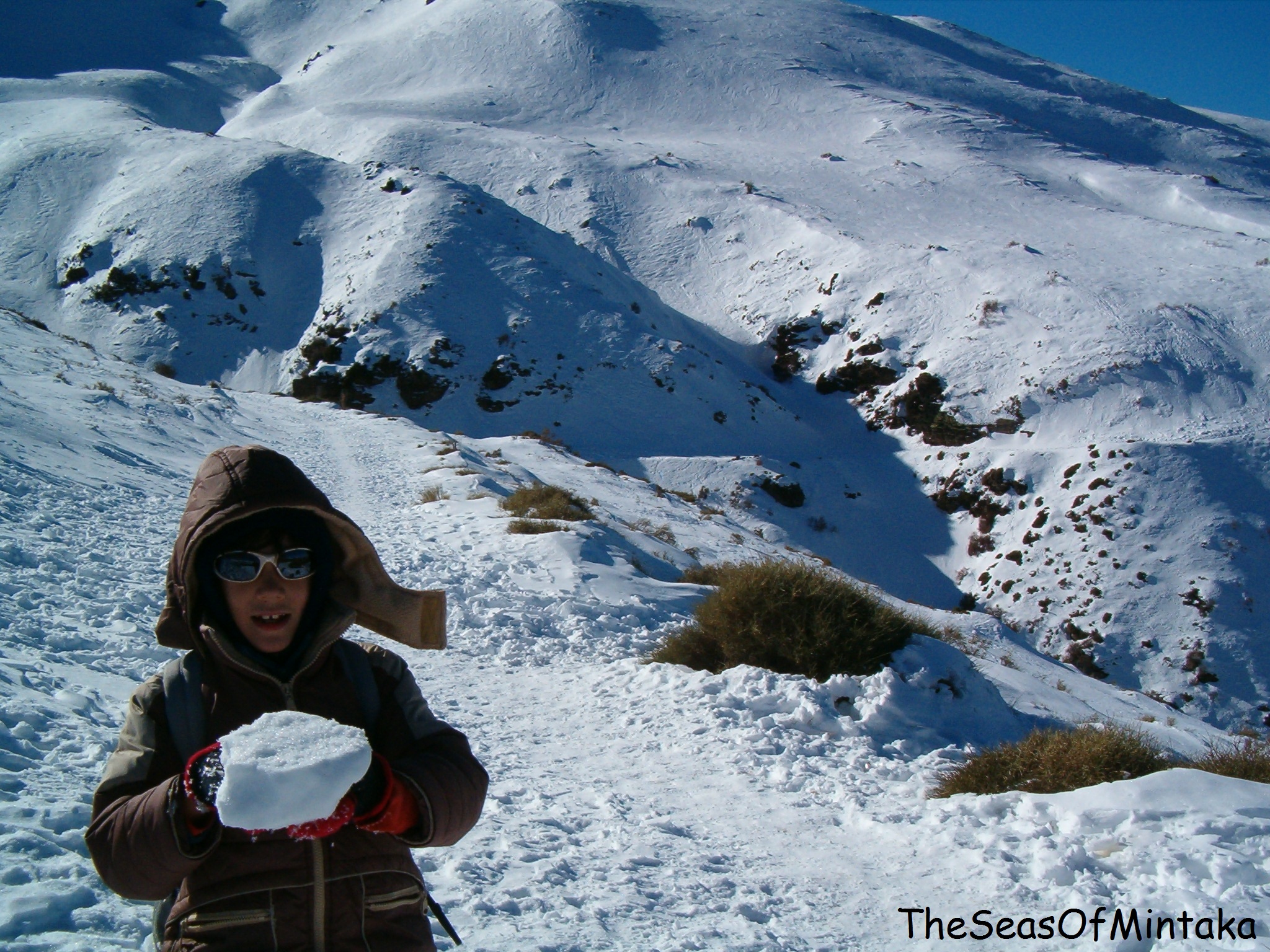
So, I fear that, unlike in our previous journey to the mountains of Sierra Nevada a few years back, my youngest son was unable to learn the delicate art of forming snow angels. He had no experience of slipping and sliding on wet and icy mounds or trying to learn to get his “snow feet” under him.

I guess all these experiences will just have to wait till another year.

Sierra Nevada Granada 2

If you enjoyed this post (I really hope you do!), maybe you will also like:

Sierra Nevada, Granada

Costa del Sol: Torremolinos

La Línea de la Concepción

The Barcelona That Tourists, Well, Some Tourists DO See

Sierra Nevada, Granada

Well now that it’s cold, dark, and the constant presence of school makes organizing long journeys a chore, seems like a good moment to reminisce on old times from the past, and some wonderful trips that we took back then.

So one fine winter’s day a few years ago, we decided to hop onto a bus (a bus because as I’ve mentioned in other posts such as this one about the Chillar River, I’m not lucky enough to own a car) and zoom off to Sierra Nevada.

Sierra Nevada Mountainside

Now, Sierra Nevada is a good 4 hours’ bus drive away from us, at least. So we do have to start off very early in the morning, I do say.

My son had been bugging me for ages and ages to see the snow, so at last I gave in. I myself, seeing as I hail from Canada, couldn’t care less if I never ever beheld a snowflake again in my life. But, you know, kids are kids and my son does NOT hail from Canada. So he had to go and see the snow.

Sierra Nevada PradollanoWell, leaving this lush and well-nurtured south coast of Spain was a bit like leaving Shangri-La. As we crossed over the mountain line which shelters the coast from the mean icy winds of the north, the landscape changed most drastically. At first, you immediately noticed that the trees were sporting all different colours: golds, browns, flaming orange. In Malaga trees are green the whole year round.

Then you would notice that the ground is bare: there’s no grass! The ground is all frozen!

When you get out of the bus in Granada, where you change over into the Sierra Nevada line, the biting wind really catches you off guard. The high in Granada in the dead of winter is lower than the lowest temperature you could experience in Malaga.

My son, of course, loved it. He loves anything new.

Now, if you are fortunate enough to own a car, getting to Sierra Nevada is relatively a breeze. You just have to make sure that you have chains or some other sort of tires adapted to the snow, and take off on the highway.

Sierra Nevada

But if you have to thumb your way over on a bus, like we did, well the easiest way to get to Sierra Nevada from the sheltered warmth of Malaga is by taking a bus on the regular Granada-Malaga line, and then catching another one to Sierra Nevada in the bus station at Granada. There are frequent vehicles on both routes, however.

Or you can do what we are planning to do this year, and sign up to an organized tour where a direct bus straight from the coast to Sierra Nevada is included in the package.

You can notice as you (or rather your bus) climbs up the altitudes: the air gets thin and frosty, the going gets rougher. If it’s a bad day, a regular snowstorm might even halt your progress. However, if you go when it’s bright and sunny, the temperatures might not reflect the grand and radiant sunshine, but you will have a smooth ride with no snow or ice on the road.

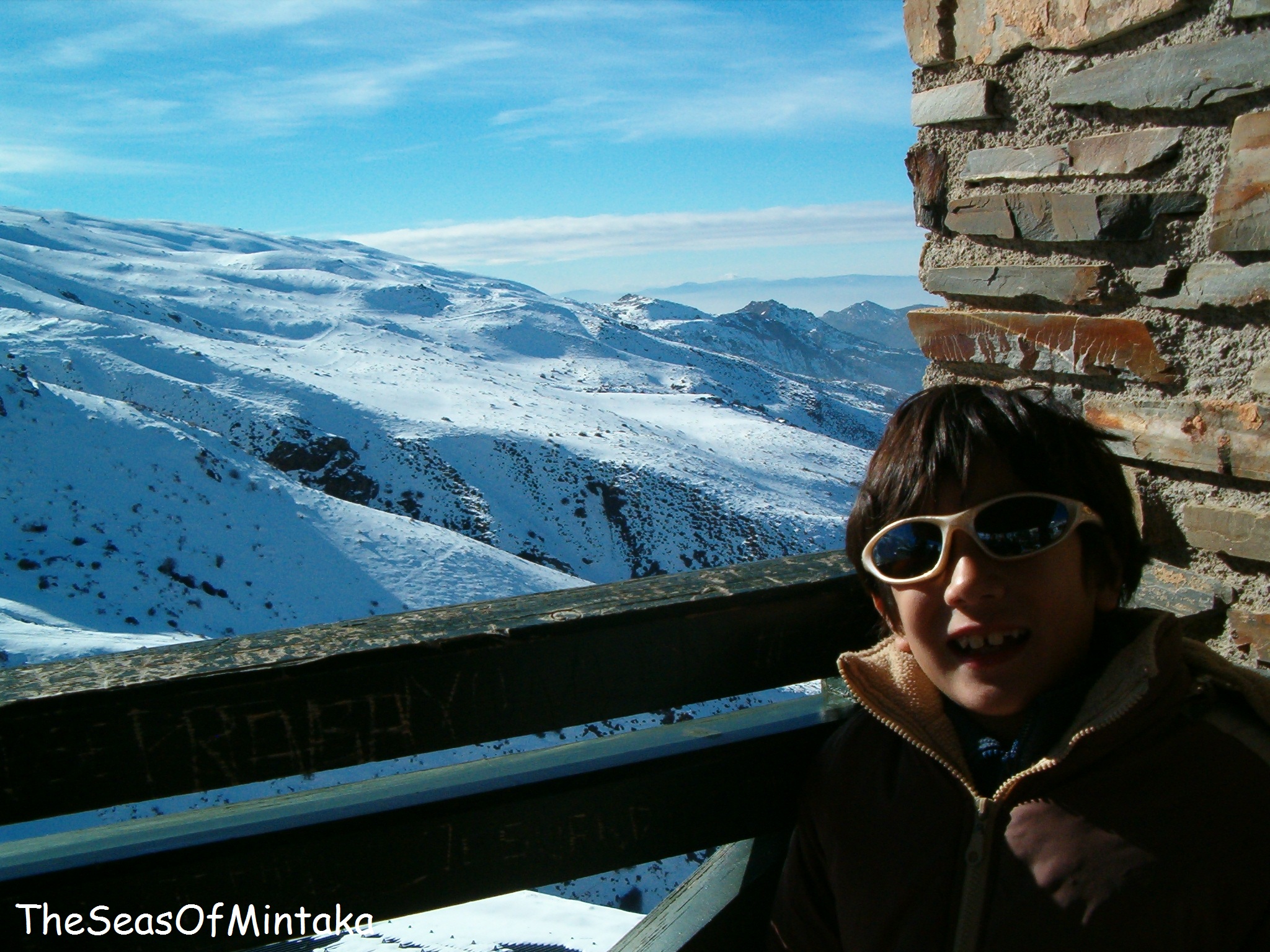
Sierra Nevada is a booming touristy resort in the middle of the mountains. The entire mountain range reaches up to almost 3500 m., but the resort itself, called Pradollano, is only about 2500 m. high. When you are up there, you can see all the wild mountaintops nearby, all empty and deserted and sheer and frozen, with nothing on them at all. Woe be it unto you if you should ever find yourself lost and stranded on one of those barren slopes.

Sierra Nevada Tracks in the Snow

I found it hard to believe that you could be so well taken care of and provided for if you remained within the resort of Pradollano, but take just one false step out of the area, and all of a sudden you could be fighting for your life in the midst of endless stretches of snow and snow and yet more snow.

So truly, this is one place where you must remain on the beaten track.

But not to worry. Even on the beaten track here, there are tons of things to do and see.

So my son and I threw snowballs. We climbed around and tried to construct a snowman (without much success, I might add). I pointed out how to make snow angels to my son, who had, of course, never seen one before. But he found it delightful to make a few. And this when as you can imagine he himself is no angel by far!

Sierra Nevada Bare Mountaintop

We also decided to hitch a ride up a ski lift to one of the popular slopes. It’s a great way to get a panoramic view of the whole resort and a glimpse of mountaintops hidden from the view of the resort below. You can also get to do a little tobogganing there.

Well, can you believe that when we arrived there, we had no winter gear at all. Nothing. Of course, considering that we live in Shangri-La, where cold-weather trappings are completely useless and would only occupy precious space in your wardrobe or drawer……

Fortunately, street vendors are keenly aware of the lack of preparation of Spaniards in general for weather that you must bundle up for, and you can find them everywhere, peddling off hats and scarves and warm fuzzy mitts.

Sierra Nevada Rocks in the Snow

Of course there is nothing like a mug of hot chocolate and a platter of steaming fries after a day in the snow. When you go to Sierra Nevada, the food is horrible and over-priced, but with all that cold, you do really yearn for something warm. So the best thing to do: bring your own sandwich, bagged lunch or tupperware, but save a little change for that steamy mug of chocolate, or rather Cola-Cao.

Although I might add that the temperatures, the day that we went, were actually quite balmy for a ski resort, seeing as they were a few degrees above freezing. Canada, where you won’t see the thermometers slip up even a tentative half millimetre over the freezing mark between October and April, this definitely was not!

So this year we will be taking it easy and hopping onto a pre-organized bus tour. My youngest son is coming along too, this time. He has never seen the snow. I might add that unlike his older brother, he has never bugged me to see the snow either. Just a different character.
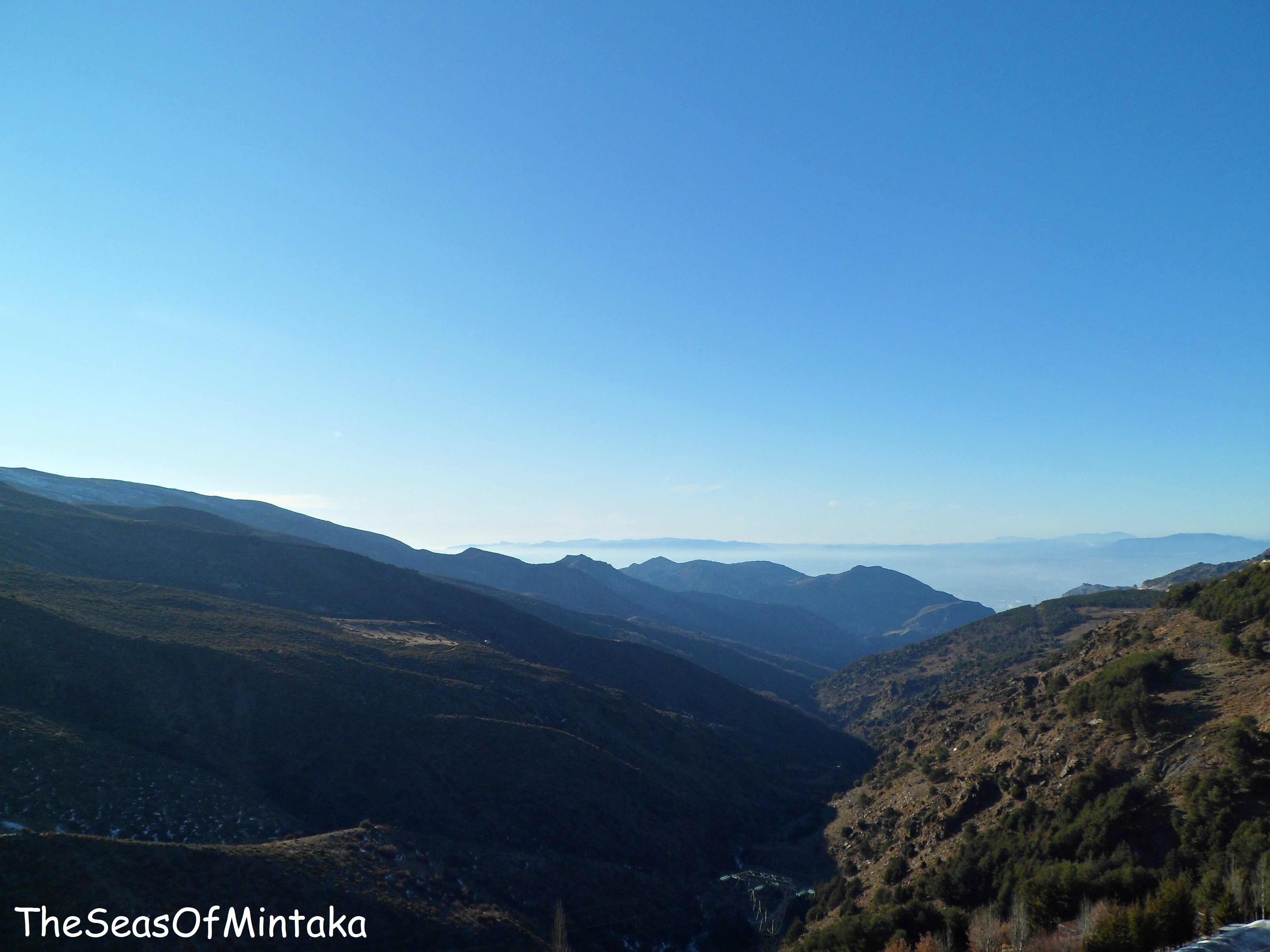
Sierra Nevada View From Pradollano Resort

Of course, perhaps the explanation stems from the fact that he was born in the stormy throes of winter and raised in freezing Barcelona (well freezing in the winter, anyways), whereas the oldest is a late spring lamb from the south. So I guess maybe the youngest already endured all the cold he could ever want to endure growing up in the cold climes of Barcelona, while the oldest enjoyed the heat of southern Spain during his first months of life.

If you enjoyed this post (I really hope you do!), maybe you will also like:

Marbella, Land of the Jet Set?

Chillar River, Río Chillar

Costa del Sol – Torremolinos

Foray Into Black and White

Chillar River, Río Chillar

Right now that it’s raining and raining and raining, seems a nice moment to remember bright, sunny days and hot excursions to the countryside and the mountains. Not that I have anything against the rain but quite the contrary, I LOVE rain. Which is why I could never live in a desert.
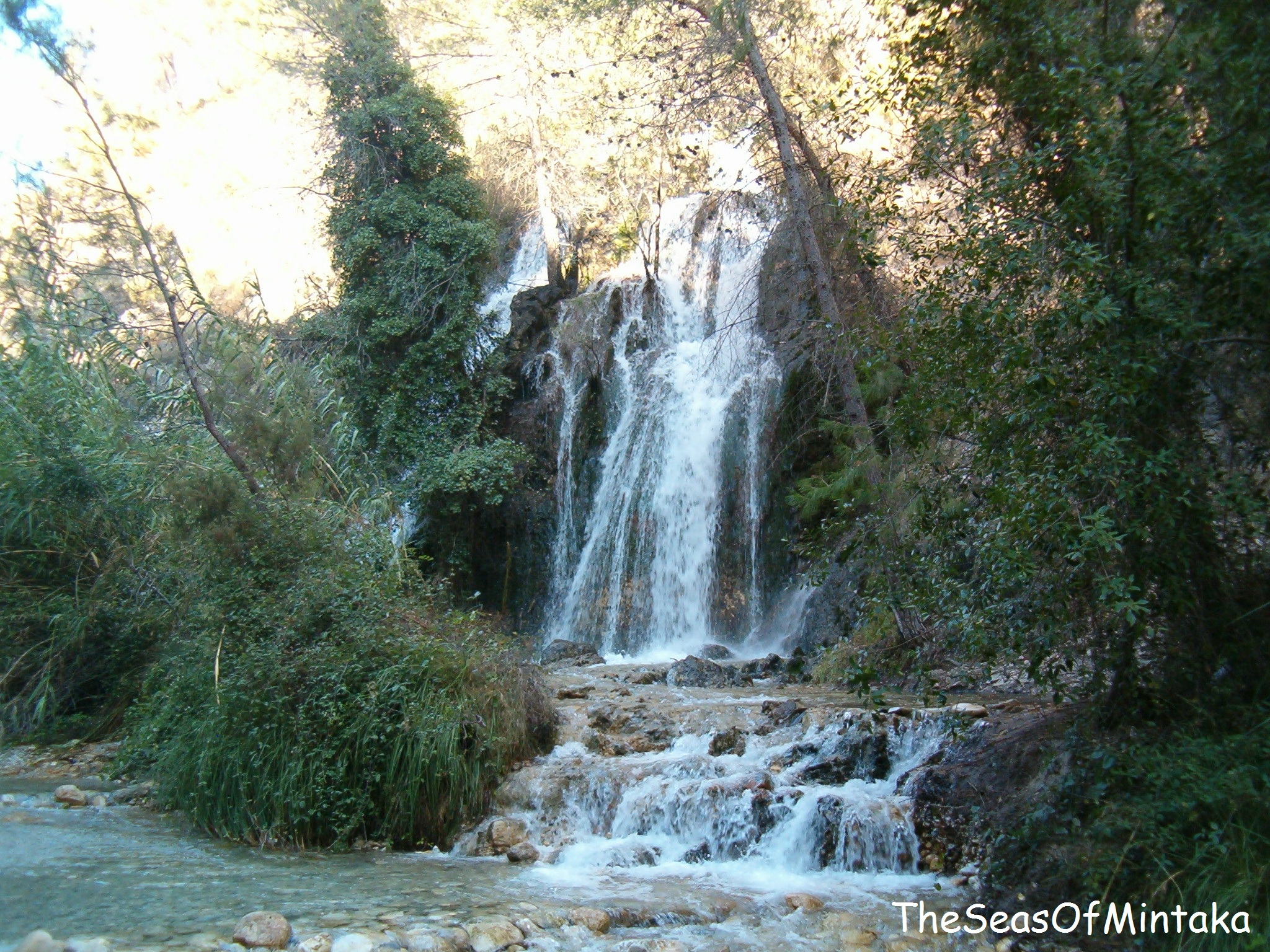
Waterfall Chillar River

However, the rain does make fun excursions and hiking hard. So now is the moment to curl up under the quilt and nostalgically relive old photos of fun times from the past – that is, this summer.

One of the places we visited this summer is the CHILLAR RIVER near Nerja, in the south of Spain.

Bridge Over Chillar River

Lots of people go there, it’s quite a popular spot with both locals and foreign tourists. Well foreign tourists who don’t mind a little bit of roughing it out in the country, that is. No relaxing and romantic joyrides in horse-drawn carriages here!

Entrance to Bridge Over Rio ChillarIf you have a car, you are really in luck! You can drive right out to the beginning of the trail and save your energy for enjoying the beauty of the area.

And if you don’t have a car, then cry!

Okay, then after you’ve had a good cry, you can still be glad that this is one route you don’t have to miss just because, unlike about 90% of the population, you are not fortunate enough to own a vehicle of your very own. You can still go there by foot.

Which is what we did.

Banks of the River Chillar

Either way, the way to arrive, is:

From the town of Nerja, walk towards the river. The river is at the entrance to Nerja if you are arriving from Malaga. It is very close to the bus stop, so even if you must use your little legs, they won’t get very tired.

If you are lucky enough to count on the services of your very own car, please do give me a call, and give us a lift the next time we go out there to the Chillar River!

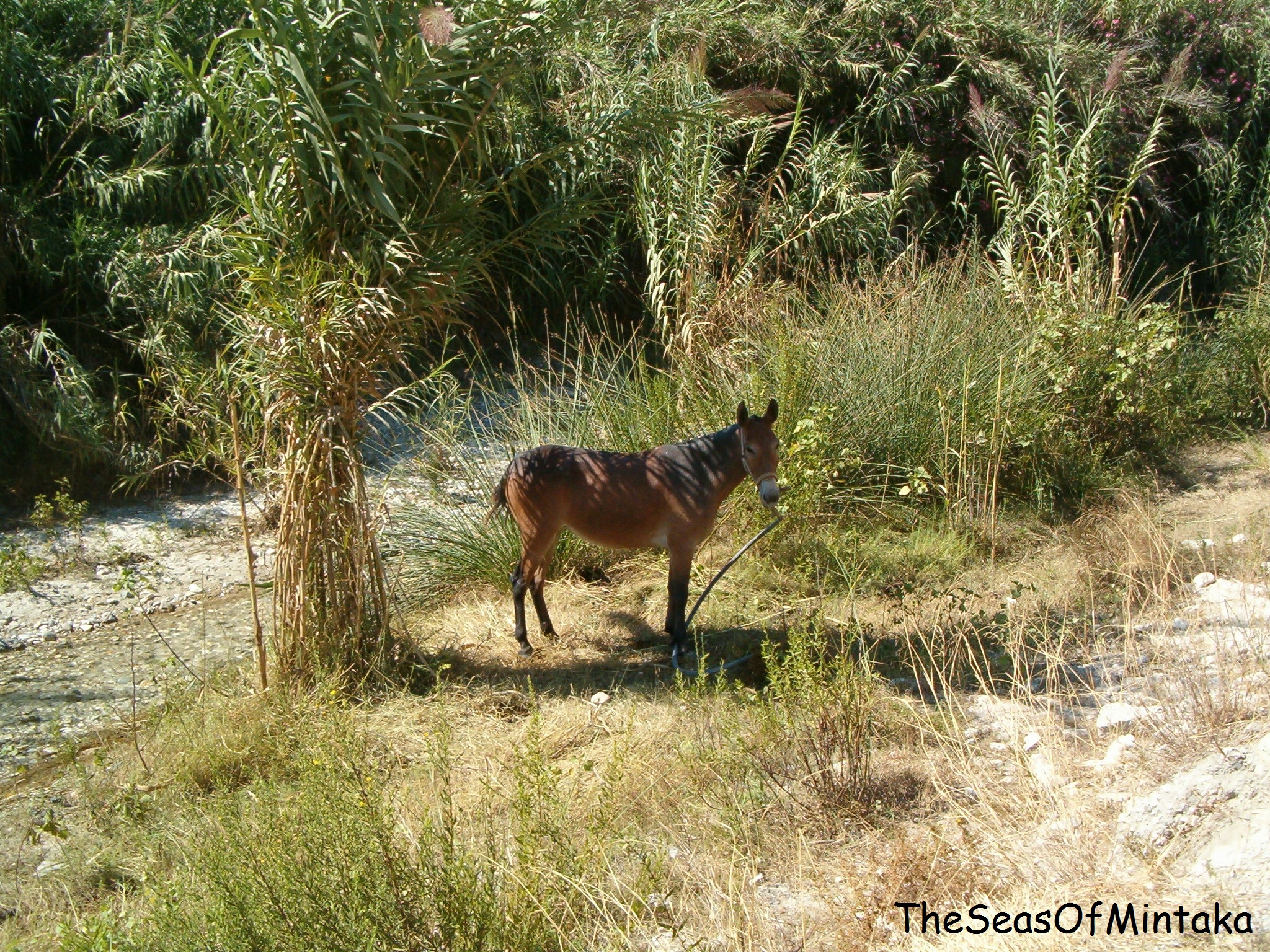
Although the very most fortunate among us could probably hitch a ride with one of these horses!

Horse 1 River ChillarOkay, on a more serious note, if you arrive by car you can also go down to the dirt road that follows along the river, on the Nerja side.

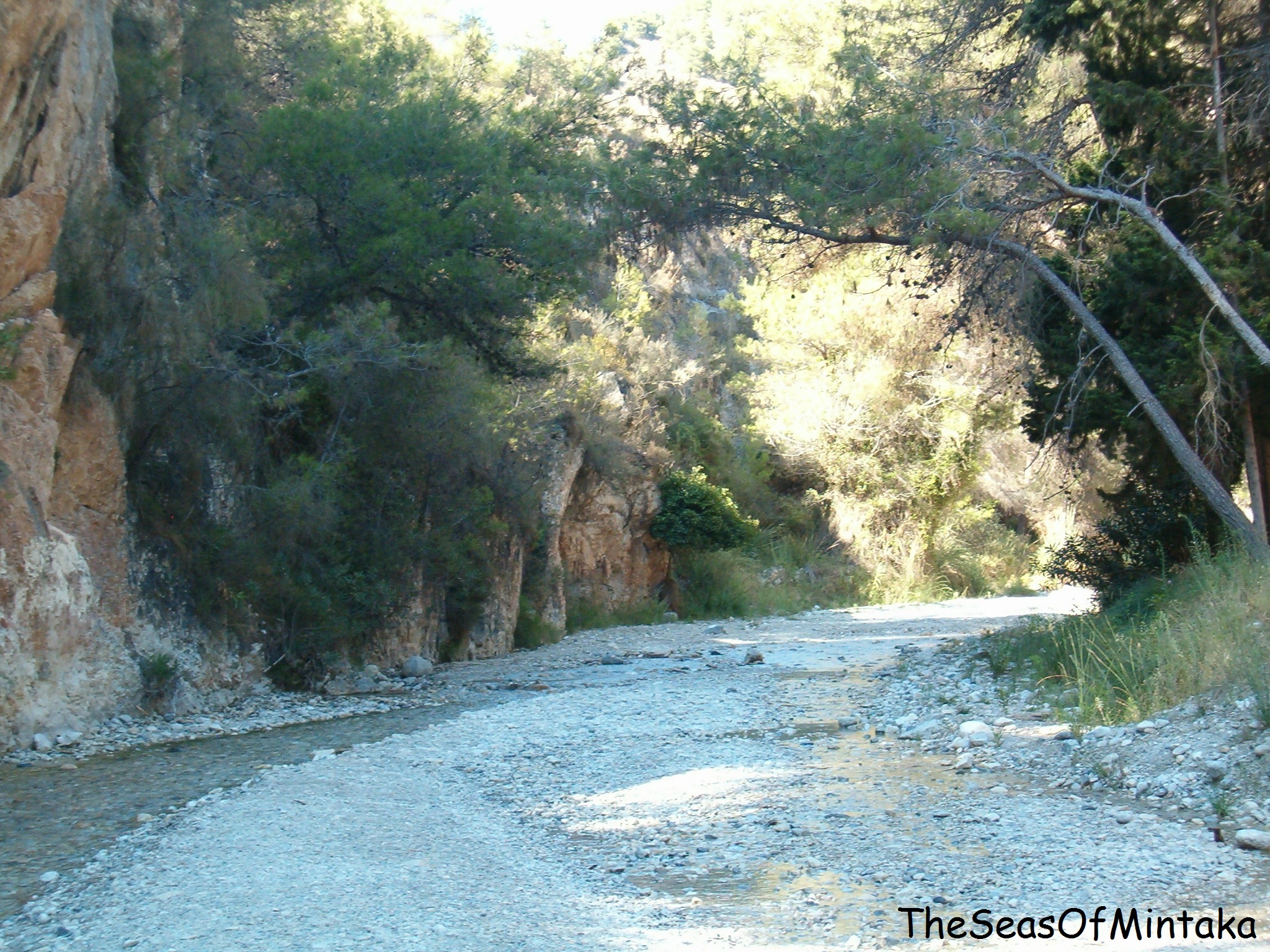
Either way, all you have to do is go up this dirt road. It’s very clear and straightforward, no danger of getting lost. The road winds along the river all the way to the top. By car it’s maybe 15 minutes. But if you’ve got to patter patter it all the way, it takes about an hour.

You will know that you have arrived when you reach a very large clearing where, chances are, a ton of cars are already parked. Here you must get out of your comfy vehicle and start fording the river. Fording the river is lots of fun and the only way to walk along it, so I thoroughly recommend that you come with water shoes. Plastic open sandals, that still wrap around the foot and therefore don’t fall off, are ideal.

Road Along the River Chillar

Now all you have to do is go up the river and enjoy the scenery.

An Archway by the River Chillar

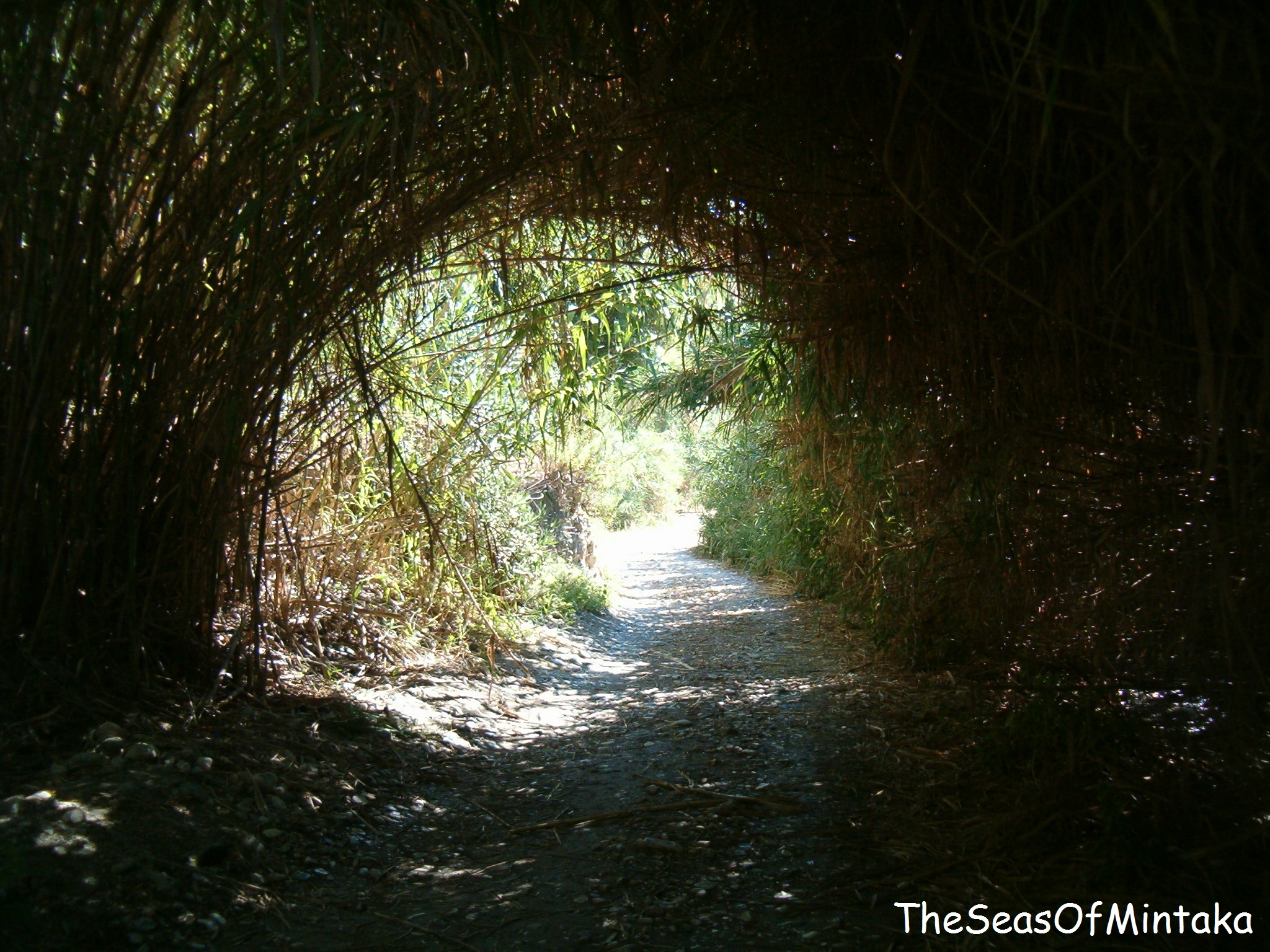
Along the way you might encounter a variety of mysterious tunnels and archways.

Tunnel by the Chillar River

This, on the other hand, is actually a garden on someone’s property, though it might be hard to believe or discern.

Garden Rio Chillar

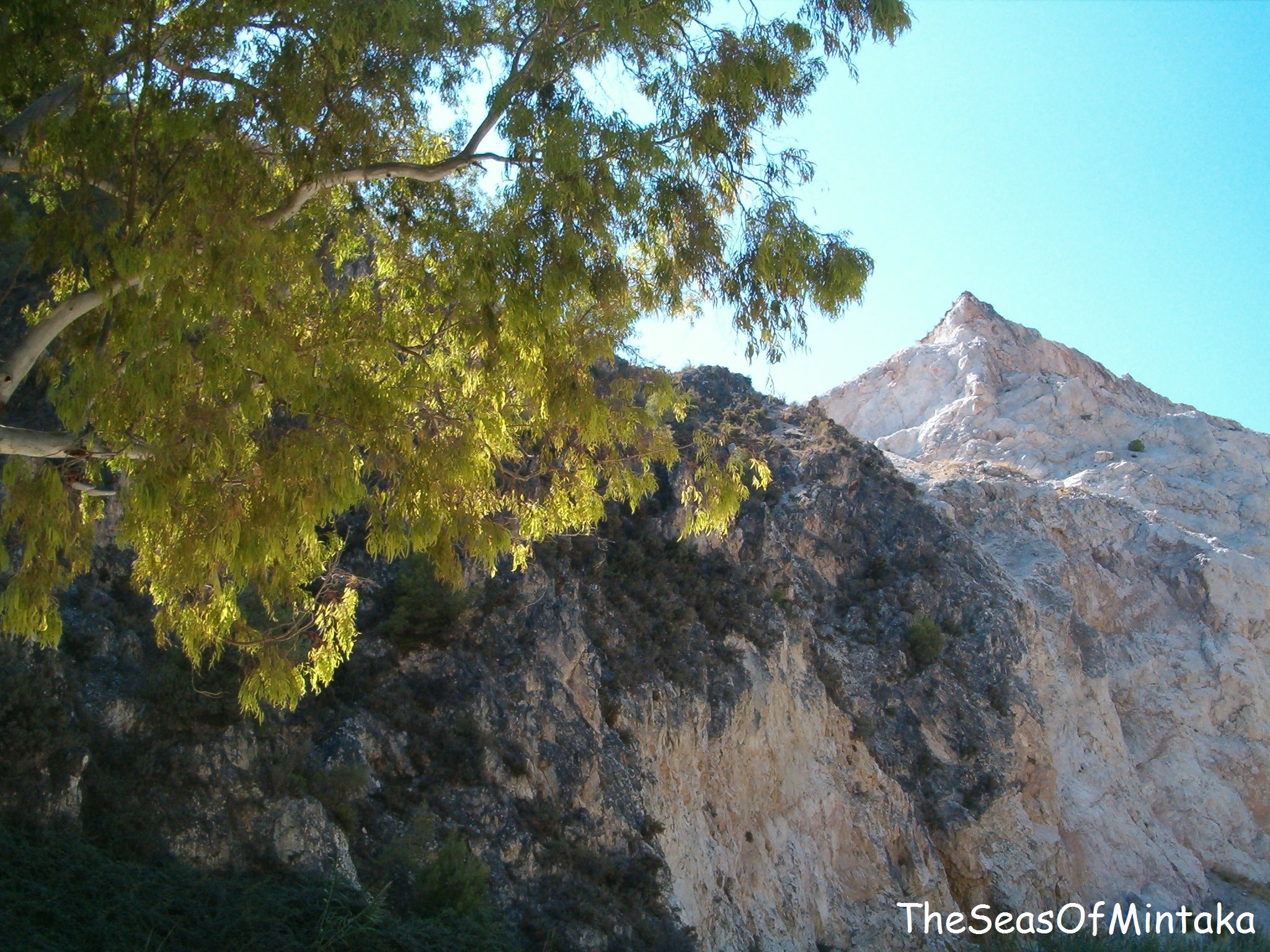
The “parking lot” is actually nestled within the confines of what was once a lofty and powdery white marble quarry, although I believe it is no longer in use as such. At any rate, you can see the very high mountains of powdered alabaster soaring overhead and engulfing the entire clearing with its bright shadows.

Marble Quarry Chillar River

These quaint steps carved into the stone lead to a tiny shed, I have no idea what this shed is used for or what it is.

Carved Steps by the River Chillar

And now, at very long last (or at least you can say at very long last if you arrived by foot, of course if you drove your vehicle up to this point, it would have been nothing but a short breeze for you) we reach the entrance to the actual river itself, the entrance to the Chillar River.

Entrance to the Chillar River

Clearing Rio Chillar

Following the Chillar River

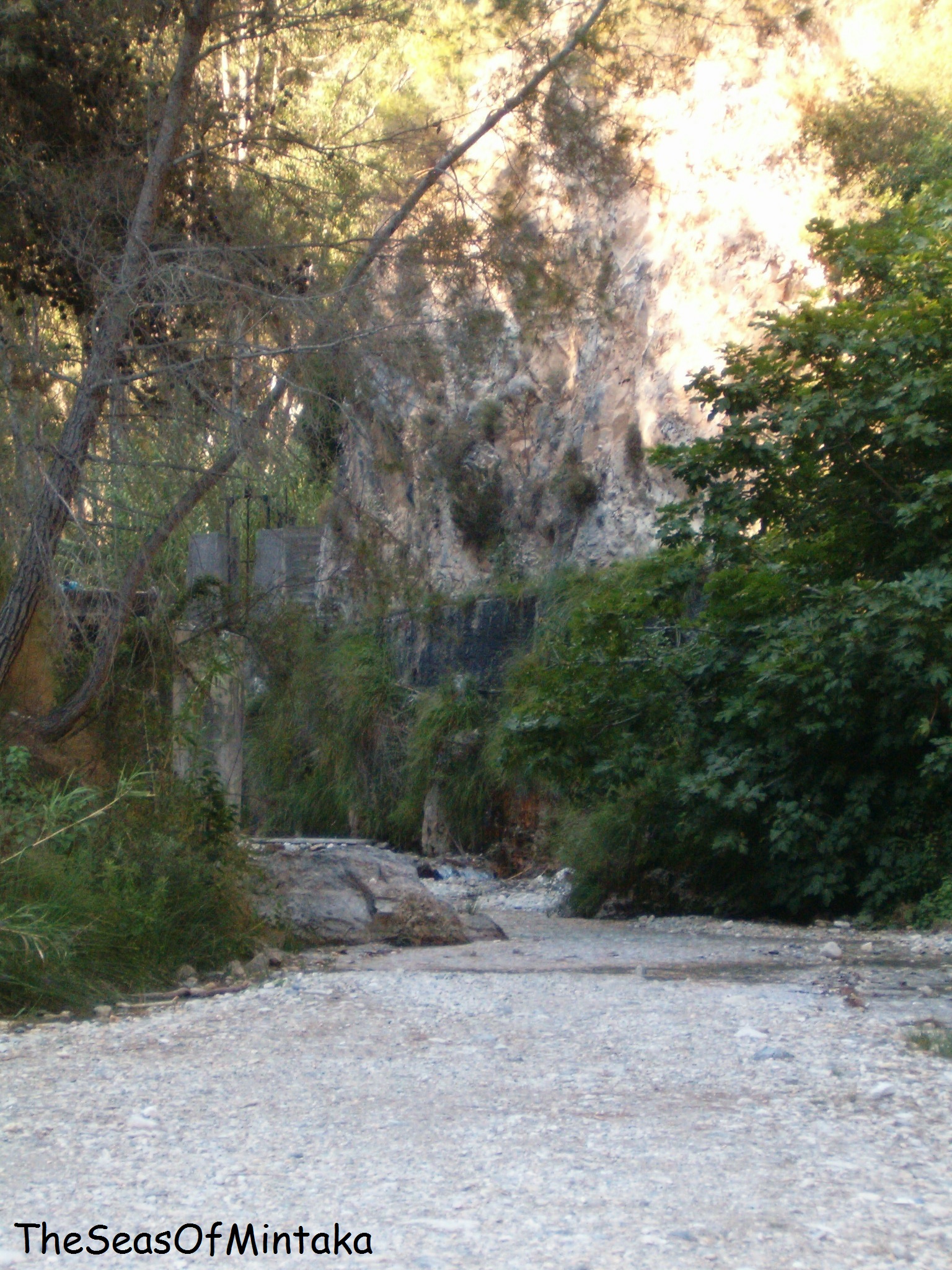
This, I believe, is or once was some sort of rustic hydroelectric power plant, although it’s very small. Perhaps a water mill would be a more appropriate name. At any rate, we didn’t climb up to have a good look.

Electric Plant Chillar River

Archway Over the River

Yet another mysterious tunnel. My son actually went in there, he’s a little mite!

Secret Tunnel in the Chillar River

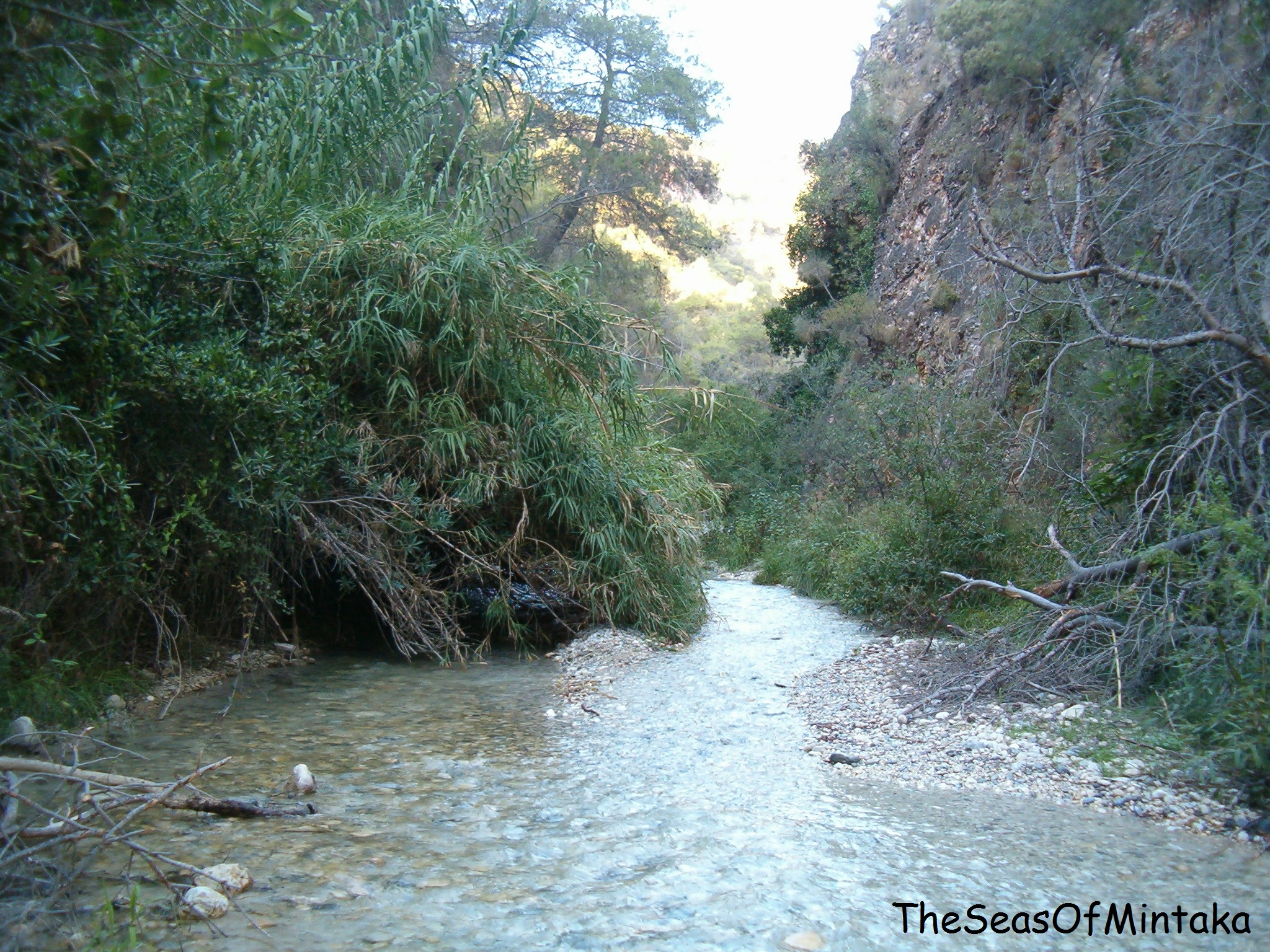
Clear Waters in the Chillar River

Here you can see that the water is so crystalline clear (but I wouldn’t drink from it!) that it looks like a spotless white immaculate path. But actually, all that is water underfoot.

More Chillar River

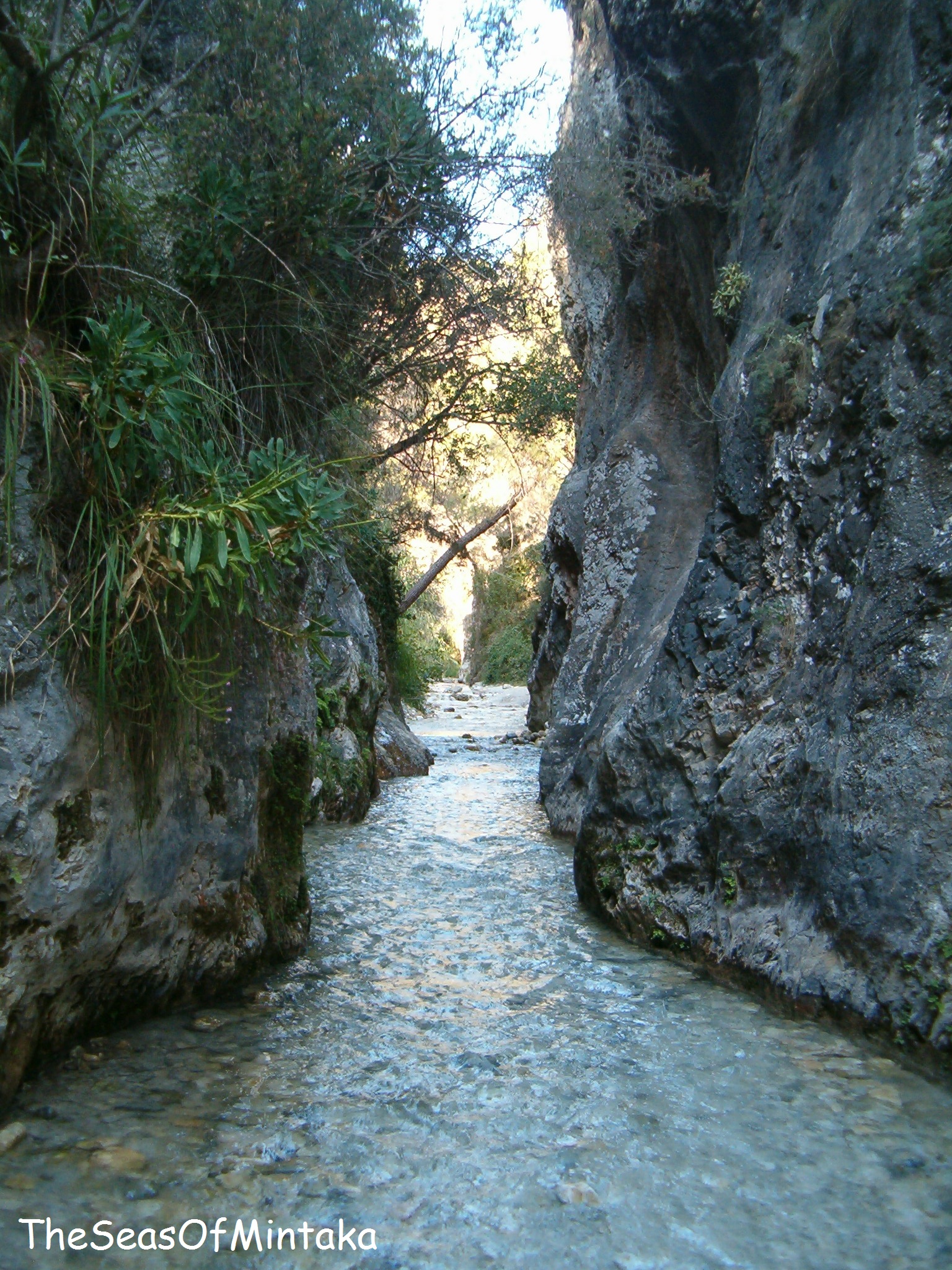
When you reach this gorge it’s a magical moment: because it’s the moment when…… your son’s sandals break! Which was very opportune, however, as it was getting late.

Gorge Rio Chillar

Time to return home, as you can tell by the inexorably lengthening shadows in these last photos.

The Sunlight Through the Trees by the Chillar River