Tag Archive | Andalucia

Voting In Spain

We just had some big elections here in southern Spain. Well, I say big. I mean, typical. Governments in, governments out. Do we really care who’s in charge?
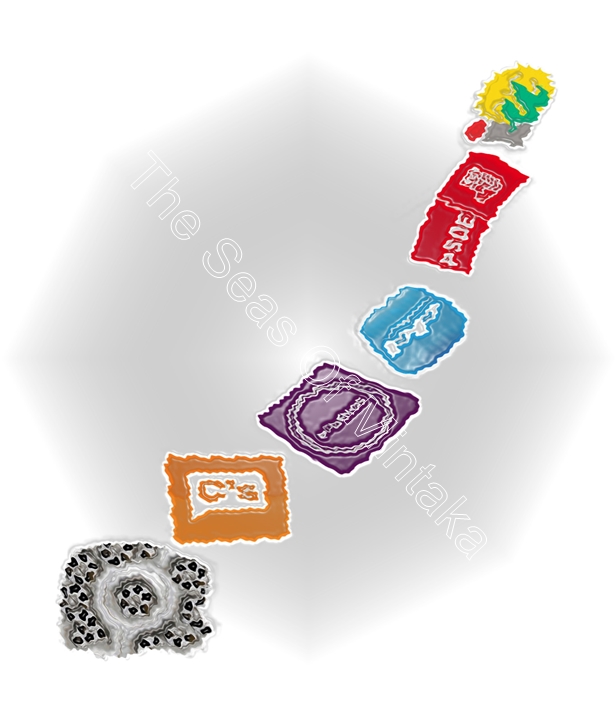
Political Parties of SpainWell, but anyways, apolitical though I am, I do care up to a teentsy tiny point who’s in charge. So I decided to do something unusual and go and vote.

Now, I don’t know what it’s like to vote in other countries, since I’ve only voted in Spain and Canada. And I don’t know whether the process in Canada is normal either.

In Canada, you don’t just sign up to vote whenever you want to. Every four years someone comes around to your door and asks you who in your family is eligible to vote. You probably have to provide some sort of proof that the people you name are eligible to vote, like a passport or birth certificate or something, that proves the person is old enough to vote. I wouldn’t know, my parents always took care of all that.

This is called “Census Day” in Canada, and during the days leading up to this all important date, there are ads in all the media reminding people to stay at home that day so that they can get onto the Census List and receive the right to vote.

I always wondered what happened to people who didn’t or couldn’t stay at home on Census Day and couldn’t get onto the Census List. Did that mean that they couldn’t vote?

And what about people who moved after Census Day, but before the next one four years hence? Did that mean that they couldn’t vote after they moved, until the next Census Day swung around?

But since those were never concerns of mine anyways, I never discovered the answers.

Now, here in Spain, the process is completely different. I like it here more, because it’s much more within your control.

Here in Spain there are Censal Offices. There’s an office in every neighbourhood, town and village. So it doesn’t matter where you live, even if you live way out in the outback or on a farm, you can sign up to the Census List.

People won’t come to your door here. Nope. It’s YOUR responsibility here to go to your nearest Censal Office and sign up for yourself. You should sign up your family members too.

Once you are signed up, your name will automatically be sent to your Poling Station every time there is an election, and you can vote.

It’s as simple as that. Easy peasey.

On the day of the election, all you have to do is wiggle your way down to your Poling Station, well equipped with your ID, of course.

When you get to your Poling Station you will find a few police officers hanging around, usually looking a bit bored, in order to keep order. I live in a quiet neighbourhood, so manning a Poling Station is a rather boring task round here.

Inside the Poling Station you will see a couple of tables with a candidate from each of the main political parties sitting around eyeing each other rather suspiciously. They are there to make sure that there is no monkey business by members of opposing political parties.

It also saves trying to round up volunteers on the street who would be willing to sacrifice a beautiful Sunday hanging around in a Poling Station.

You have to present your ID and when they find your name on their lists, you can vote.

In Canada, the way to vote was, you went into a little private cubicle where you could pick up a sheet of paper. The names of all the candidates and their political parties were printed on the paper, and you had to choose just one. I don’t remember whether you chose your candidate by circling them, or making a tick mark next to them or making an X next to their name. But the point is, you had to read the instructions and make the correct type of marking, or your vote would be invalid.

Then you would slide the paper inside an envelope, which you would then seal and put inside the voting box.

Here in Spain, you also get to go into a private cubicle. But you don’t get a piece of paper with the names of all the candidates. Here, in the private cubicle, you will see piles of flyers in holders on the wall. There is a flyer for every candidate and their political party.

You must choose the one flyer corresponding to the one candidate and political party that you want, and you must slip that one flyer inside an envelope.

Then you seal the envelope, so no one can see which flyer you had chosen, and put the envelope into a voting box.

After that you can leave, pass the bored police officers, and hang out in the nearby bars, where you can observe all the people venting their passions and adrenalin with heated debates about politics.

If you enjoyed this post (I really hope you do!), maybe you will also like:

The Orange Trees

In The Studio of Antonio Lopez

Poetry by Hermenegildo: Bienvenida Sea La Primavera

Bye Bye Birds!

One Sunday in February – Massacre on the Road to Almeria

One nefarious day in February 78 years ago, over half the population of Malaga fled to the countryside, down the long and difficult seaside road to Almeria that was their only escape route. Behind them, the invading troops of General Franco, already crowing victory. And on all sides, Italian, German and Franquist naval ships and war planes showering bombs down on the fleeing and defenceless civilians, in the forgotten Massacre of the Road to Almeria.

Malaga 1937

Most of this human column of fleeing refugees, over 150,000 souls, was made up of women, children and families, who had had nothing to do with the war. As happens in all wars, it’s the politicians and military men who make the decision to attack, and the civilian population – women, children and ordinary men just trying to make a living doing whatever they can – who pay the high price.

The Spanish Civil War (1936 – 1939) was, like all wars, complicated and difficult to explain. Most people supported the Republicans. However, the opposition, led by Francisco Franco, enjoyed the support of the Fascist troops of Germany and Italy, and it wasn’t long before they began to conquer the entire country.

Wherever the Franquists went, people fled. Like all invaders, Franco’s troops were notorious for their savagery and barbarism. They looted, stole, raped, murdered, tortured and took whatever they wanted.

So it wasn’t surprising that as soon as the inhabitants of Malaga discovered that these invaders were at their doorstep, they took to the road and fled.

In those days the only unoccupied route out of Malaga was along the dangerous and sinuous road to Almeria. There was little place to hide along the road: it wound its way between the sheer cliffs that fell down towards the sea on one side, and the high mountains on the other. The distance from Malaga to Almeria: 219 km.

That ill-fated Sunday morning, people woke up to the sounds of the Franquist troops surrounding the city, grabbed their things and ran. Those who could climbed into cars, trucks or onto donkeys and mules. The rest had to make their way on foot.

16-year-old Ana María Jiménez woke up in her home in the Capuchinos neighbourhood, looked out the window and saw Francisco Franco’s troops on the mountains overlooking the city, with their cannons and their flags and their muskets.

Her family, like most other families living in Malaga, loaded their belongings onto a truck heading out of town and started on their way. In Rincon de la Victoria, on the outskirts of Malaga, they ran out of gasoline and continued the rest of the way on foot.

“I didn’t understand much about the war at that time,” recalls José Martos, who was only six back then, “but I had it clear that we were running from the Fascists.”

Malaga 1937

The journey lasted a week. Along the way, as the naval ships drew up close to the shore and began pelting them with bombs and bullets, people started to fall. The Italian and German aviation added their two cents’ worth by riddling the straggling survivors with more bombs.

There was no reason for doing this, other than the cruelty, sadism and taste for innocent blood of the militants who ordered and carried out these attacks.

The people fleeing along the road weren’t Franco’s enemies. They were just families trying to make a living during hard times. They were carpenters and farmers and cooks and schoolteachers. Mothers with babies and little children.

Malaga 1937

A woman stops to feed her baby, surrounded by dead people, on the long road from Malaga to Almeria

The man who ordered this cowardly attack against the defenceless citizens, Gonzalo Queipo de Llano, explains it thus: “Those masses of people were fleeing, they were getting away. So I thought, why not make them run a little harder?”

The people who survived did so by hiding in holes, ducking down on the ground, rolling behind stones or anything that could shelter them.

Along the way, Ana María and the other refugee children met families who had lost loved ones. Parents burying children in holes in the ground. Entire families lying dead together.

The group found respite about halfway down the road: at Motril, the International Brigade succeeded in halting the enemy attacks and the people were free to continue their journey without death raining down from the sky. However, by then most were so exhausted they could hardly walk.

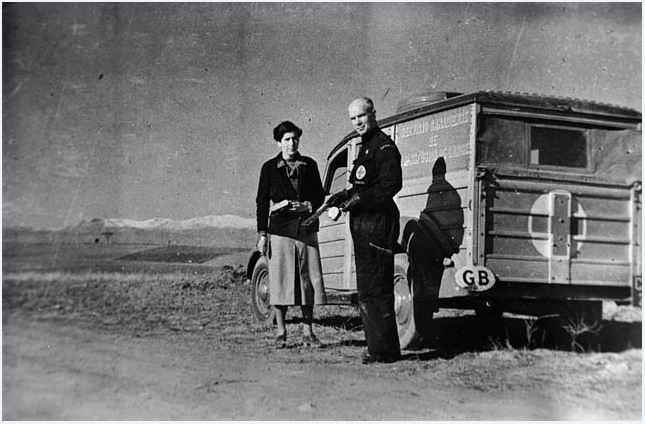
Suddenly, salvation surged up out of nowhere. Like a dashing white knight in shining armour at the head of a flaming cavalry, the Canadian doctor Norman Bethune arrived with a party of trucks to drive them the rest of the way to Almeria.

Norman Bethune was a Canadian doctor working the Republican frontlines bringing medical aid during the Spanish Civil War. He was in Valencia when he received news of the forced exodus from Malaga, and he hurried to Malaga as quickly as he could.

Malaga 1937

Norman Bethune with his ambulance

Over and over again, the trucks took off overflowing with people, then returned for more. Norman Bethune himself rode in a vehicle which he had converted into an ambulance, where he attended to the ill and the wounded.

The odyssey didn’t end in Almeria for most of the families on this trail. When they arrived in that remote city, most made their way out on ships and trains and travelled to Barcelona. Some of these families remained in Barcelona for the duration of the war while others journeyed into exile, returning only after the war had ended.

Photo credits: Norman Bethune

For more information:

El camino de los olvidados (Diario Sur)

La matanza de la carretera de Almería (El País)

La matanza de la carretera de Almería (Málaga en Blanco y Negro)


If you enjoyed this post (I really hope you do!), maybe you will also like:

Abandoned Sugar Factory at El Tarajal, Malaga

The Old Provincial Prison of Malaga

In the Studio of Antonio Lopez Diaz

A Treasure Huntin’ We Will Go

Christmas Lights in Malaga


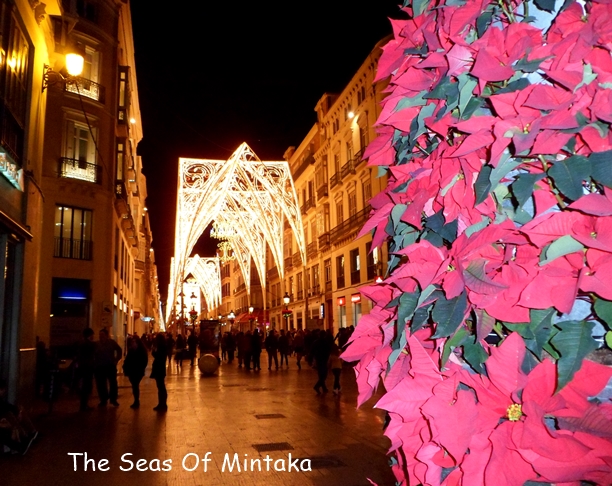
I’ve noticed that everywhere, people are posting photos of the Christmas lights where they live on their blogs. So I thought, why not do the same? When you come right down to it, the Christmas lights of Malaga are definitely worth it!

Christmas Lights Malaga

This year they had a Gothic cathedral theme.

I also took a photo from underneath the “Gothic arch”.

Christmas Lights Malaga

As you can see, the throngs of crowds admiring the Christmas lights were immense.

Of course, Christmas lights weren’t the only thing that there was to admire on the busy streets of Malaga.

There were a myriad of shows being put on by street entertainers from large groups to single artists. One very large gathering was formed of a group of about six musicians playing Christmas carols on the trumpet, clarinet and other brass instruments, plus three guys dressed up as the Three Kings of Orient to liven up the crowd. However, I couldn’t see them very well, because there was a mass of people around them, enjoying their music. Which wasn’t surprising, because their music was incredible.

Christmas Lights Malaga

But since I couldn’t photograph them because there were too many people, I went to quieter corners.

Christmas Lights Malaga

Christmas Lights Malaga

A young girl was selling these little cottages by a fountain for people to use for making their own personal “belenes”, or Nativity scenes.

Christmas Lights Malaga

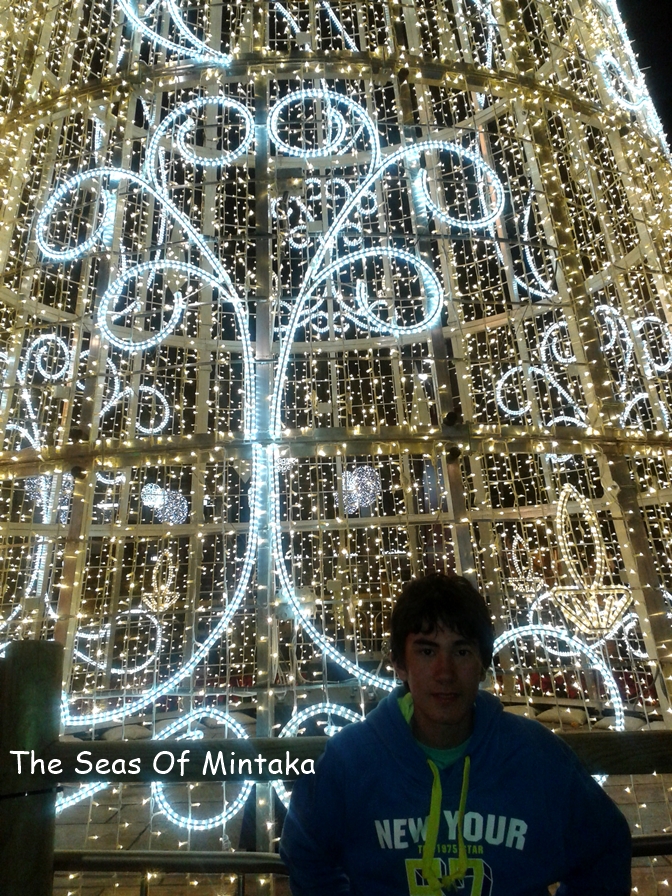
What stroll would be complete without a photo of my kids? This is my son in front of the Christmas tree in la Plaza de la Constitución, Malaga’s main square.

Christmas Lights Malaga

I LOVE CHRISTMAS WITHOUT SNOW!!!

When I was a child it was the only thing I dreamt of for Christmas: a Christmas without snow. Of course, living in Canada, that was absolutely impossible.

If you enjoyed this post (I really hope you do!), maybe you will also like:

Who Is Jack Frost?

Kings’ Day Parades

Hot, Muggy September Nights

Holy Week in Malaga

Everyday Scenes From Everyday Life in Spain

When I read about people living in another country, I always wonder what it’s like to live in that country.

I wonder what these people do every day. How they do their shopping. Where they buy their food. What sights do they see as they walk around.

So I thought I’d show some of the things that I see every day.

Now, as a developed European country, Spain isn’t really that different from any other developed country. There are high-rise buildings, modern skyscrapers in the downtown areas, apartment buildings fully equipped with all the usual utilities and household appliances, cars, internet and mobile phones.

There is free public education for kids. Free medical care and modern hospitals. Corporate offices, shops, department stores and shopping centres.

When I visited Morocco, I found life there extremely different from life in a developed Western country. That would most definitely be a delightful country to visit for a photo shoot, or to write a blog about. However, at that time, I wasn’t in the habit of taking photos and I didn’t have a blog.

In Morocco local people usually do their shopping in the vividly coloured marketplaces filled with leather and spices, not at supermarkets. I didn’t see a single shopping centre.

However, here in Spain, life isn’t really very different from life in Canada. My kids go to school in very civilized, well-equipped elementary and high schools with amazing teachers. I usually do the shopping at a regular supermarket.

Yesterday, however, just by chance, I happened upon several interesting scenes and took photos of them. So I thought I’d share them today as typical scenes from an ordinary day here in Spain.

Flowers in November

Nothing spectacular about this photo, but it always thrills me to see green trees and flowers blooming all over the place in those chilly, arctic months when the rest of the world is covered in snow!

Misty Mountains in Malaga

Who would’ve thought you could see misty mountains in sunny Malaga?

Fire in a Building

As I was coming home I happened upon a fire in a building. Although spectacular, fortunately it wasn’t serious and nothing happened. The affected building is the one with the lighted doors in the background.

Ham in Super Vegetariano

This place really made me laugh out loud! Well, to understand the “joke” I’d have to explain it a little. As you can see, this used to be a large vegetarian supermarket called “Super Vegetariano”. It very quickly went out of business, given the *overwhelming adoration* of the Spanish public for vegetarian diets and a more ecological and ethical lifestyle haha. Now the new shop that has opened up in its place, which is quite wildly more successful than its predecessor, is called “Azabache: Jamones y Embutidos” which means “Azabache: Ham and Deli Meat”. It is enjoying far greater success than the old vegetarian supermarket. Clearly, round here, tradition and “the way things have always been done” always win out over ecology and a more ethical way of life.

Maro in November

Now here are a couple of photos that aren’t from yesterday, but they do show typical places that we can see and visit round here. This photo is from the exact same date but a few years ago. You can see the people bathing in the sea in the background, so happy that here in Spain you can swim in the sea in November!

Empty Garden

An empty playground in the rain that we pass every day on the way to school.

If you enjoyed this post (I really hope you do!), maybe you will also like:

Malaga in Black and White

…And It’s a Rainy Night in Malaga

Midnight, And All Is Well

Abandoned Sugar Refining Factory at El Tarajal, Malaga

Sugar Factory Tarajal Malaga

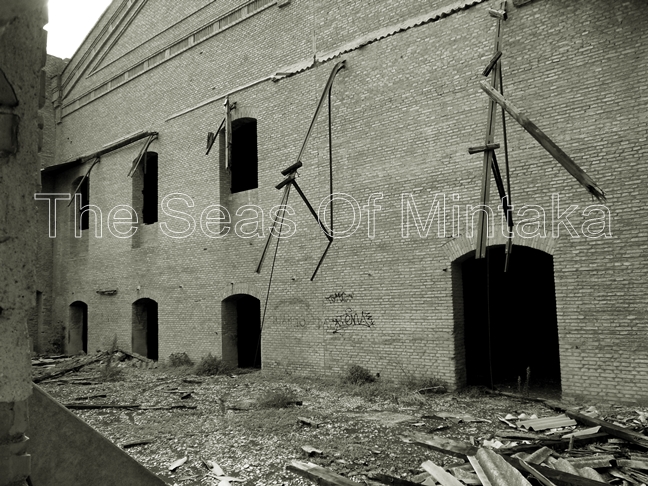
I first discovered the old, historic, abandoned Sugar Refining Factory of El Tarajal, Malaga, when I was sent to work at a nearby industrial park.

Sugar Factory Tarajal Malaga

I love photographing old, abandoned historic places of interest, such as the Old Provincial Prison of Malaga. So I couldn’t wait to get in a photo report about this new discovery.

Sugar Factory Tarajal Malaga side

On the chosen day I set off with my oldest son. The factory is surrounded by a wall, but I hoped someone would come along and open it.

Interior Courtyard Sugar Factory Tarajal Malaga

Here is a photo with open doorways, but they’re not open to the exterior. They look out onto an inner courtyard that you have to climb into through a hole.

Sugar Factory Tarajal Malaga

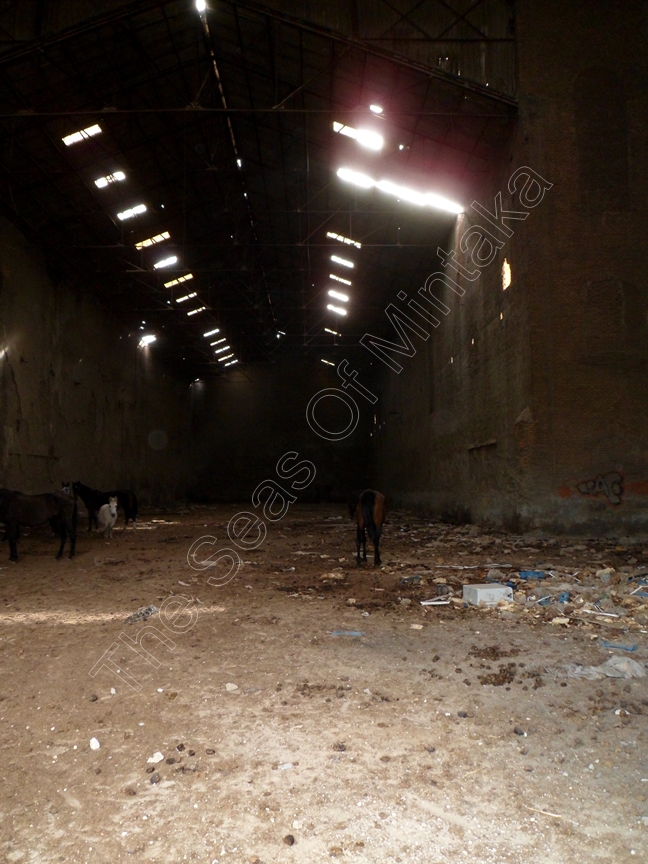
Sure enough, we were lucky and as we arrived someone else arrived too. It was a group of farmers, they are using the factory now as a stable and dozens of horses live in it now.

Interior Sugar Factory Tarajal Malaga with horses

At the beginning of the twentieth century Spain provided practically all the sugar that was consumed in Europe, so sugar production became a major industry in Spain at that time. Sugar factories were erected all over the country.

Water Tower Sugar Factory of El Tarajal Malaga

Interior Water Tower Sugar Factory Tarajal Malaga

This was the water tower, where water for the factory was stored.

Chimney Sugar Factory Tarajal Malaga

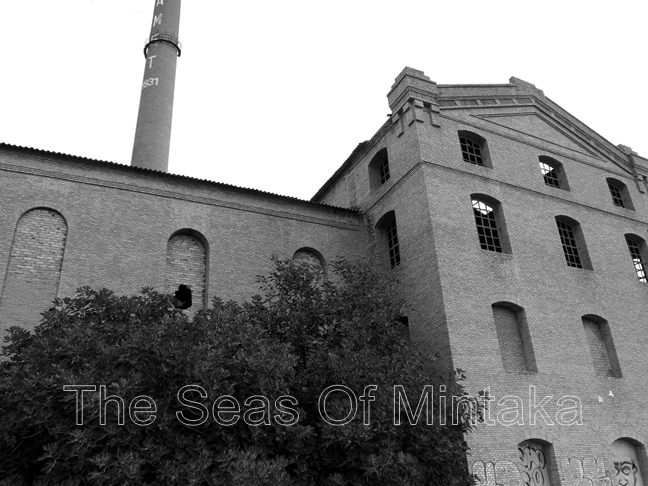
The Sugar Refining Factory of El Tarajal was built in 1931 (and if there was any doubt about that, the date is inscribed into the chimney along with the name “AMET”, which I assume is the company that probably built the factory).

Graffiti on the Sugar Factory El Tarajal Malaga

Graffiti on the side wall of the sugar refinery of El Tarajal, Malaga.

Interior Sugar Factory Tarajal Malaga

Once considered an architectural wonder with walls dressed in sumptuous tiles, displaying a rather formal, stately classical air, the factory was built by the influential Larios family, the family that gave their name to Malaga’s main street.

Back of Sugar Factory Tarajal Malaga

After the Second World War Europeans began to import sugar from Central and South America because it was cheaper, and no one wanted Spanish sugar anymore. So all the Spanish sugar refining factories were closed and left alone to their devices. To the ravages of time, abandonment and vandalism.

Latrines Sugar Factory Tarajal Malaga

We assumed that these were the latrines. They were sooo indescribably disgusting, we didn’t want to step inside to find out!

Interior Sugar Factory Tarajal Malaga

You can be sure this is not a place where you would want to touch anything! We made sure to touch as few things as possible. When climbing inside (through the holes as there were no open doors) we did have to touch the icky walls a bit.

Sugar Factory Tarajal Malaga

I went with my oldest son, which was great, because he was able to chat with the farmers while I took photos. Farmers are very laconic and don’t think about things a lot and don’t spend a lot of time wondering about things and pondering over things. (Or at least it seems that’s what they’d like us to believe).

Back Sugar Factory Tarajal Malaga

So they didn’t think very many things about the factory. They didn’t know much about it nor did they have any interest in its history. They told my son: “It’s just a big stable!”

I’m not too sure what sugar cane looks like, but it would only make sense that it would grow near a sugar factory, right?

Sugar Cane at El Tarajal Malaga

My son told me it had been a bit boring. So I took him for a Coca-Cola to reward him afterwards for being such a game haha!

Horses El Tarajal MalagaIf you enjoyed this post (I really hope you do!), maybe you will also like:

The Old Provincial Prison of Malaga

Malaga in Black and White

CBBH Photo Challenge: Reflection

A Treasure Huntin’ We Will Go

Puerto Banus – Bumping Elbows With The Jet Set

Perhaps not everyone knows, but Puerto Banús, in Marbella, is synonymous with…… jet set, rich Arab and European royalty, Hollywood celebs on holiday, luxury yachts and Lamborghinis, James Bond, maybe? (Well, not yet, at least.)

I’m not too sure how or why this little locality acquired such fame. It’s just another ordinary port on the extensive coastline of southern Spain. So I don’t know how the powers that be saw fit to transform Puerto Banús into the playground of the ultra rich as opposed to, for example, some other port on the same coastline such as Estepona or La Línea de la Concepción.

But be that as it may, very fortunately, taking a stroll in Puerto Banús alongside the super rich and famous is free. Anyone can go there. Happily, there’s no “entrance fee” in order to gain access to the town or port.

You can take a walk there and window shop at the many luxury boutiques that you can find there. You can admire the dozens of luxury yachts all neatly parked in a row (many of which were, nonetheless, up for sale – a testimony, perhaps, to the effects of the times that we are living on the pocketbooks of even the ultra rich?).

Parked Yachts Puerto Banus

It was a very happy day for me that my friend and I took our families out for a walk in Marbella, where we had a fabulous lunch at an incredible local treasure chest of a restaurant – unfortunately I didn’t pay much attention to the name of this restaurant, and I wouldn’t be able to find it again, since I just followed my friend around haha – that served the most amazing Malaga fried fish dishes.

Malaga fried fish is a specialty of this Spanish province, and it has nothing to do with the greasy, pre-packaged fried fish that is so popular in Britain.

(Many apologies to fans of British fried fish, I’m sure there must be tasty fried fish in Britain too, it’s just that, unfortunately, I didn’t get the chance to sample any of those kinds of fried fish when I was in London, only the greasy ones……)

I usually take photos when I go out to eat with the kids, but for some reason I wasn’t in the mood the other day. So I’ve got no photos of our famous dish.

Here’s a photo of my kids devouring similar fare, however, on a beach in the city of Malaga.

Pescaito Frito

After our meal we decided to spirit ourselves over to Puerto Banús. I’d never been to Puerto Banús, although I’ve gone several times to visit in Marbella.

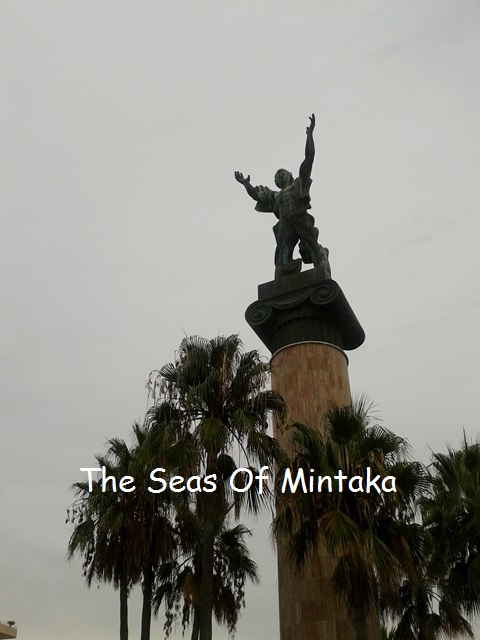
Playa de Puerto BanusThis is a weird statue, commissioned for a huge sum from a Russian sculptor. We thought it was weird since it reminded us of the statue of Columbus that points out to sea in Barcelona.

Statue Puerto Banus

This is the statue of Columbus in Barcelona.

Colon Barcelona Columbus Statue

Sunset in Puerto BanusIt’s hard to see them, but if you squint a little bit you can see the itty bitty (and not so itty bitty) fishies in the water here.

Fish Puerto Banus

Little fish, big fish, swimming in the water
Come back here, man, gimme my daughter!

PJ Harvey

Imagine being the owner of one of these!

Yachts Parked in a Row Puerto Banus

 Lighthouse Puerto Banus

If you enjoyed this post (I really hope you do!), maybe you will also like:

La Línea de la Concepción

Marbella, Land of the Jet Set?

The Barcelona That Tourists Never See

The E-Book You’ve Been Waiting For

The Sounds of Holy Week

I’m sure that by now, especially if you are a “Spain-o-phile” lol, you must have seen dozens of photos of the Holy Week processions (and much better than the ones I’m going to post here!). But have you HEARD what Holy Week sounds like here in Spain?

So here I am posting a couple of recordings that I made of the music that they play. Just stare at the photos, imagine a cool night breeze brushing gently against your face (it was a warm night though, 22 degrees), listen to the sounds of Holy Week and pretend that you are surrounded by crowds of devotees and you can even transport yourself there and experience a Holy Week procession for yourself!

Well I couldn’t upload any music so I made a video instead! I invite you to check it out here (I put it in my son’s channel cuz I haven’t got one, in case you’re wondering about the name, oooh I’m so behind the times……):

or here, if the above link doesn’t work:

http://youtu.be/UZrqljbkEos

And while we’re at it, I put up a new demo too on MySpace, I invite you to check it out here:

Medley from Serena Amadis on Myspace.

or here, if the above link doesn’t work:

https://myspace.com/120763532/music/songs

Well that is pretty much all we have been up to these days!

If you enjoyed this post (I really hope you do!), maybe you will also like:

Preparing for Holy Week

Pa Amb Tomàquet

Poetry by Hermenegildo: Bienvenida Sea La Primavera
Bye Bye Birds!

Grey Skies: Ces Jours Si Tristes, Si Gris, Profonds, Estos Días Tristes y Grises, Profundos, Just a Little Piece of Sky

Ces jours tristes, profonds, sans fin et sans espoir, quand les rêves deviennent gris et plus lointains que jamais et le ciel pleure incessant, grisâtre et sans repos.

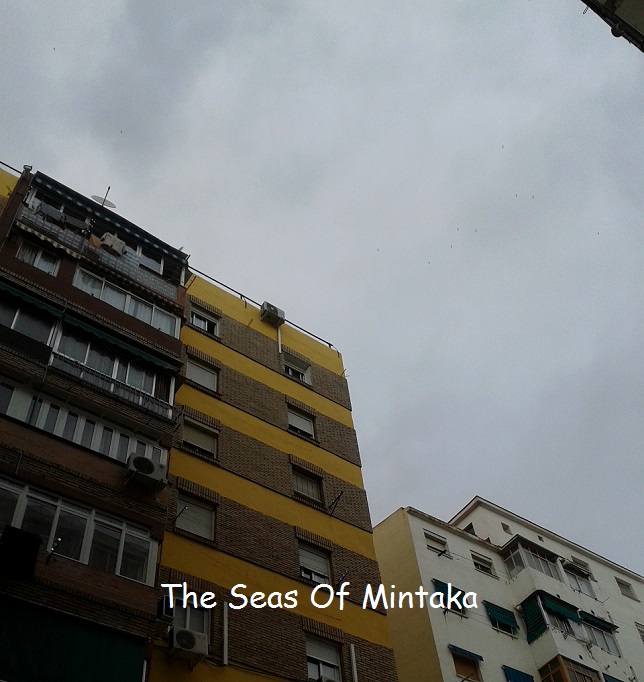
Just waxing dreary and drab on a drab and dreary winter’s day in southern Spain. Even if we’re really lucky and we never get snow or ice, we do get grey skies. I love the rain. But life can seem dreary and hopeless when this is the only piece of sky you can get from the window of the tiny one-bedroom-with-a-walk-in-closet-as-the-second-bedroom in da inna big city where we live.

Grey SkiesOn a brighter note, this is the Med in January. You can see it is raining somewhere around Torremolinos (where all the grey lines are slashing down) and out at sea. But you can still appreciate the brilliant sunset.

Med In JanuaryJust daily life here in a warm country in winter. It’s great to be in a place where it never snows, but on the other hand, daily life can still drag you down, especially if the economy is bad and you have to work ten hours every day just to make ends meet and pay the bills. There’s no time to even go out for a walk to enjoy the brilliant weather that we have the privilege of, well, enjoying! This photo was snapped as I got off the bus and dashed off to trudge away yet a few more hours at one of the companies where I work. I like the company but the hours are long. Not at this particular company, in case they happen to be reading this hehe, but all together at the three companies together, the hours are long.

If you enjoyed this post (I really hope you do!), maybe you will also like:

Andalucía Cuatro de la Tarde

…And It’s a Rainy Night in Malaga

Happy Giant Cockroach Hunting!

How Much Do YOU Value Your Friends?

The All New Metro de Malaga

Oh it’s been a while, hasn’t it? But what nicer way to start off the new year than by posting a new entry here, right?

A couple of weeks ago we had the privilege to be among the first passengers to inaugurate the new Metro of Malaga. Unfortunately, true to character, I forgot to bring the camera along. But fortunately, mobile phones come with cameras these days too!

Metro de MalagaFor one entire hour we got the chance to ride, completely free, up and down on the new Metro lines as much as we wanted to. We could leave the stations, come back in again, get off at any station that we fancied……

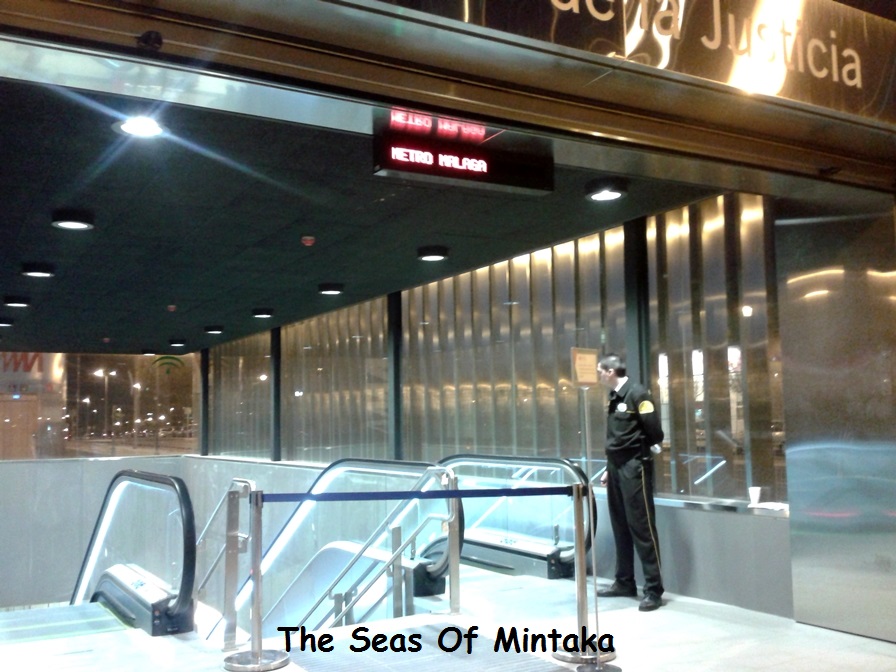
Ciudad de la JusticiaThis was one of the stations where we could get off and go outside, then come back in again, La Ciudad de la Justicia, next to the city courthouses. On December 21, only seven stations were open and this was one of them. However, supposedly, when the metro is finished, there will be fifteen stations on the red line (line number one) and ten on the blue line (number two). We are actually lucky enough to live close to three metro stations!

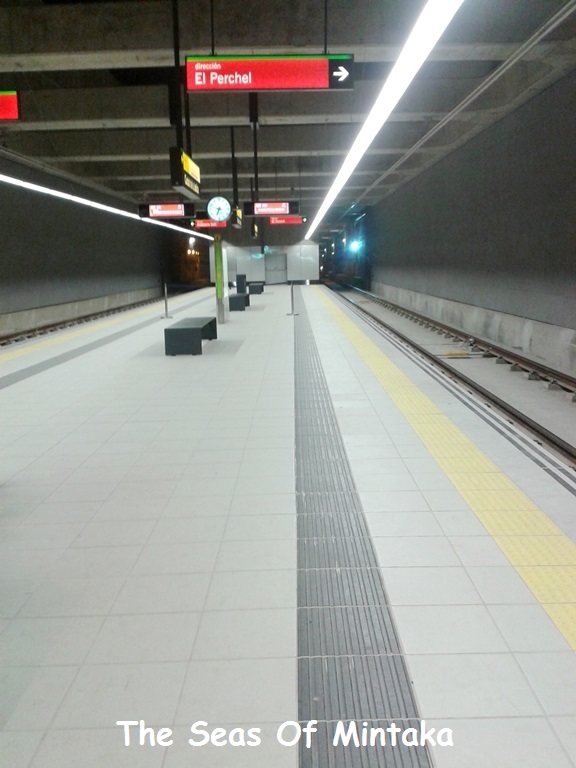
AndenesYou can see how vast and empty these platforms look, during this pre-inaugural phase. But I’m sure it won’t be long before they are filled up with harried commuters rushing to work.

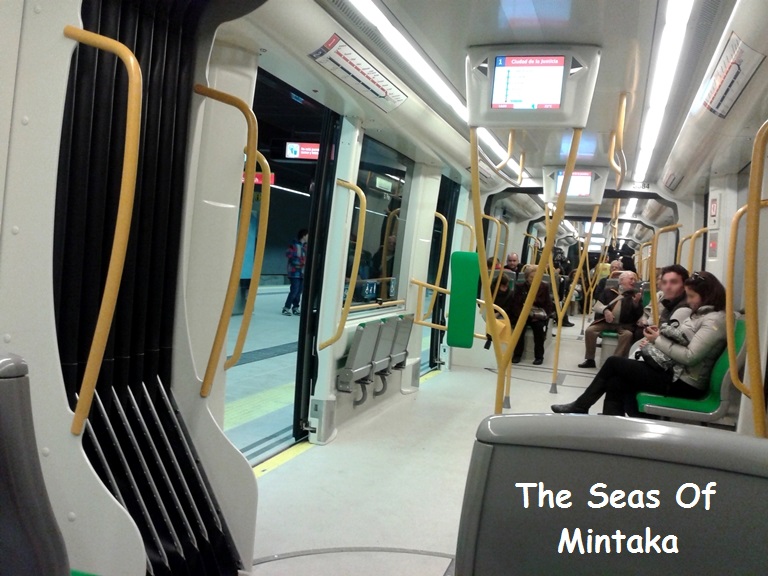
Dentro del metroWell even though this doesn’t have much to do with the metro, I wanted to end with this cute little “postcard”, a pic of a typical show window in an ordinary shop decorated with a Belén for these holidays. So many anonymous and unsung merchants creating real works of art like this one all over the city.

BelenIf you enjoyed this post (I really hope you do!), maybe you will also like:

Kings’ Day Parades

Sierra Nevada, Granada
Subways Around the World

My First Demo

In the Studio of Antonio Lopez

Antonio Lopez DiazAntonio López Díaz is a painter and sculptor. He’s also a genius. And one of the seven members of the Movimiento Indaliano that was founded in a culturally impoverished, post-war Almeria, in the south-east corner of Spain.

Antonio Lopez DiazAntonio Lopez became known most especially for his very personal style and his inimitable portrayal of daily life in the streets and villages of a traditional Almeria that no longer exists today.

Although I cropped most of the photos to only show the painting in question, here I felt like revealing how Antonio Lopez has all his paintings set up, one right next to the other, above and below, some way up high on the walls, some leaning on other paintings and some propped up on the floor (usually against another painting), in his studio.

In recent years, however, he became fascinated with modern and abstract art, and his hypnotic use of light and colour permeates all his latest work.

Antonio Lopez has been drawing and painting since he was almost a toddler. In fact, in his studio he pulled out an old painting that he had made at school when he was only six, which was when he discovered his precocious vocation.

These are two of his best-known works, and have been featured in numerous exhibitions.

Nonetheless, he only started studying formally when he was fourteen, and soon he signed up for classes with the Movement’s founder, the painter and sculptor Jesús de Perceval who was already a master artist. The two maintained a close friendship until the latter passed away in 1985.

The seven members of the Movimiento Indaliano, all of them painters, sculptors and artists, revived the pretty much inexistent cultural scene in a city devastated by the Spanish Civil War during the 1940’s. They adopted the traditional symbol of Almeria, the Indalo, as their logo, hence the name Movimiento Indaliano.

Antonio Lopez DiazAntonio Lopez has lived a very picturesque and exciting life. After studying under the tutelage of Jesus de Perceval for several years, he decided to strike out on his own and moved to Brazil. There, he became quite renowned, and many of his paintings and sculptures still decorate public places, churches and altars today.

Antonio Lopez DiazThis sculpture of a dog is in his studio, but you can see another, almost identical one gracing a street in Almeria.

He eventually returned to Almeria, where you can also see samples of his paintings and sculptures as you walk around the city. I feel very privileged to know Antonio López.

This is his octopus stool, and next to it, a sculpted self-portrait.

Antonio Lopez DiazThe master himself at work in his studio.

Antonio Lopez DiazThis bronze statue, which was commissioned by the City of Almeria, stands in a quiet garden plaza in the city centre. (I’d taken some photos of my son standing next to it too, but he kept showing up with funny faces! Hence those photos are respectfully not included here.)

Antonio Lopez DiazThe general public won’t be able to see this mural painting of the Pão de Açúcar, Sugarloaf Mountain in Rio de Janeiro, because it decorates the entrance to the apartment building where Antonio Lopez lives.

Antonio Lopez DiazThe master painter, relaxing in his studio surrounded by my sons and his works of art.

If you enjoyed this post (I really hope you do!), maybe you will also like:

My First Demo

The Old Provincial Prison of Malaga

Bye Bye Birds!

The Orange Trees